
Two batteries labeled “100 Ah” can behave so differently that comparing them by that number is close to meaningless.
One of them will give you 50 amp-hours before you should stop. The other gives 90. One will feed a 1,000 W inverter; the other will sag and trip it. One recovers fully from being emptied; the other quietly dies from it.
This isn’t a spec sheet comparison. It’s the five differences that actually change how you live in the van, with the numbers behind each.
“I killed a perfectly good AGM running a 230 V fan overnight through an inverter. That’s the kind of mistake this site is built to save you from.”
1. Usable capacity: the 100 Ah that isn't 100 Ah
AGM: use half. Lead-acid batteries are damaged by deep discharge. Take an AGM below 50 % regularly and you shorten its life dramatically. So a 100 Ah AGM is, in practice, a 50 Ah battery.
Lithium (LiFePO4): use 80-90 %. The chemistry tolerates deep cycling without meaningful damage. A 100 Ah lithium is realistically a 90 Ah battery.
That’s the first thing nobody puts on the label. To match one 100 Ah lithium, you need roughly two 100 Ah AGMs — which means twice the weight, twice the space and twice the cost of the AGM option. None of that matters if you haven’t worked out how many amp-hours you actually need in the first place — here’s how to size it from your real daily usage.
Suddenly the price gap looks different.
2. How fast you can take it out
Capacity is how much energy is stored. Discharge rate is how fast you’re allowed to remove it, and it’s where AGM most often disappoints.
- AGM: comfortable at 0.3C to 0.5C. A 100 Ah AGM delivers 30-50 A without complaint.
- Lithium: handles 1C routinely. A 100 Ah lithium delivers 100 A.
Now put a 1,000 W inverter on each. That inverter asks for around 98 A.
The lithium supplies it. The AGM is being asked for roughly twice what it’s built to give — so its voltage collapses, the inverter sees a number below its cut-off, and it shuts down. The battery is fully charged. It simply can’t deliver at that rate.
This is the single most common reason people conclude their inverter is faulty. Full list of causes here, and if you’re still choosing an inverter, size it here first.
The practical rule: if you plan to run anything over about 600 W through an inverter, AGM will fight you the whole way.
Voltage under load: the flat line and the slope
This is the difference you feel every day, and it rarely appears in comparisons.
AGM voltage falls steadily as it discharges. Full it sits near 12.7 V; at half capacity it’s around 12.1 V; and under load it sags further still. Your equipment spends most of its life receiving less than 12 V.
Lithium holds a nearly flat curve. It stays around 13.2-13.3 V through most of its usable range and only drops sharply near the end.
Why that matters in practice:
- Your appliances get the voltage they were designed for. A 12 V compressor running at 11.8 V works harder and less efficiently than the same one at 13.2 V.
- Inverter cut-outs stop happening. Most inverters trip below 10.5 V. With lithium you’re a long way from that until the bank is genuinely almost empty.
- The state-of-charge reading actually means something. With AGM, voltage is a rough guide at best, and useless under load. With lithium, the BMS reports real numbers.
The AGM sags. The lithium holds. That’s the whole difference in four words.
Charging, and how you’ll know it’s dying
Charge acceptance. An AGM takes charge at roughly 0.2C — a 100 Ah AGM absorbs about 20 A comfortably. Lithium takes 0.5C or more, so 50 A into the same nominal capacity.
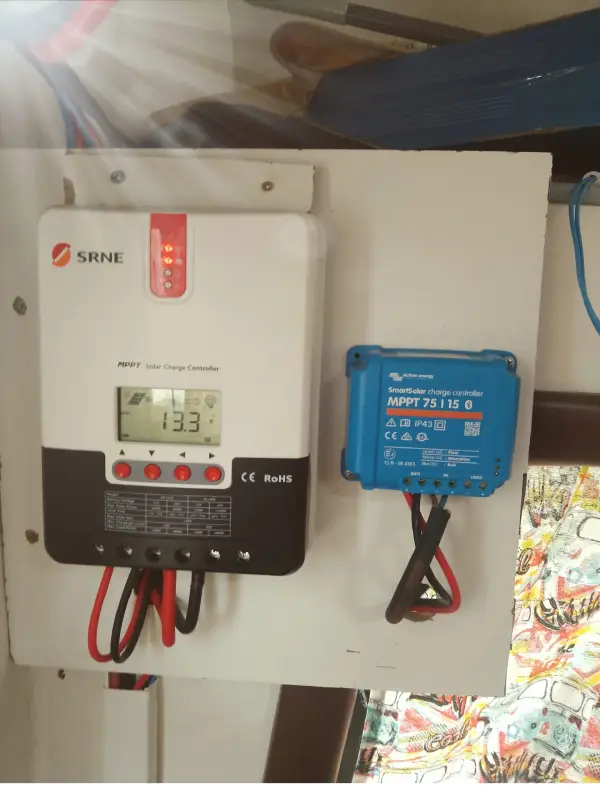
On a solar setup that means something concrete: AGM often can’t absorb what your panels produce on a good day. You have the energy on the roof and the battery won’t take it fast enough. Lithium takes everything you can send.
And there’s a warning sign almost nobody watches for.
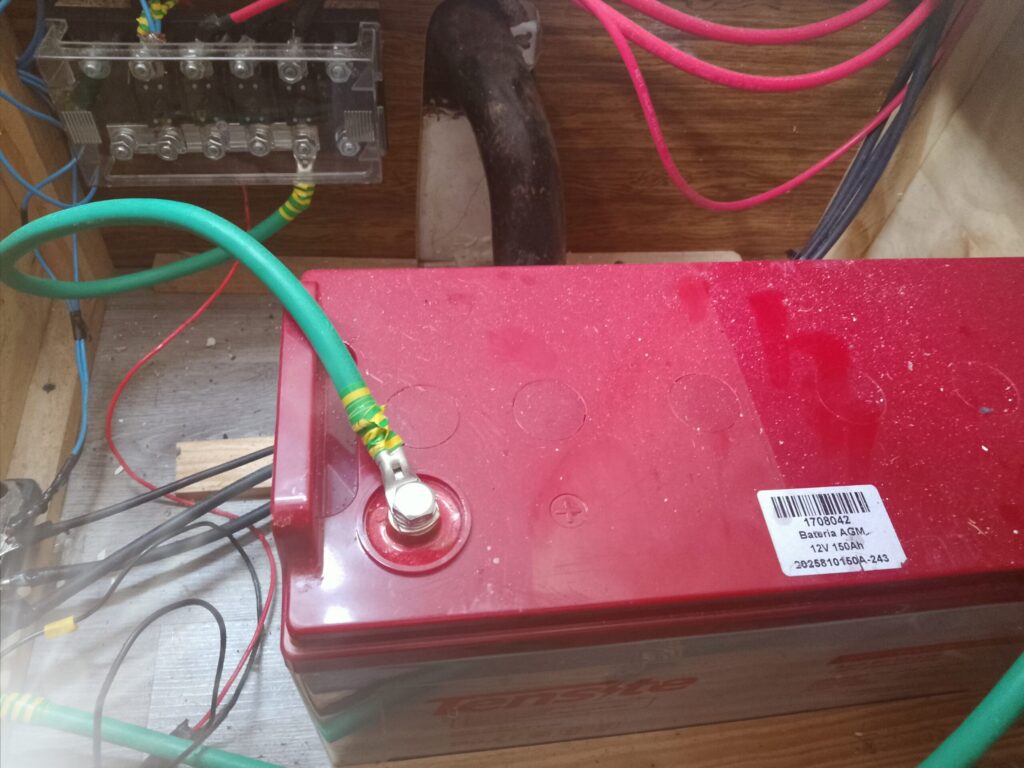
I run a 150 Ah AGM. When I charge it from a portable power station, that station used to deliver over 330 W into the battery. Today — same station, same cables, same battery — it won’t go above 155 W.
That’s not the charger weakening. As lead-acid degrades, its internal resistance rises, so its terminal voltage climbs faster during charge. The charger reaches its voltage ceiling sooner, drops out of the constant-current stage early, and tapers off. Charge acceptance falling by half is one of the clearest degradation signals available, and it’s easier to read than any capacity test.
If your charger used to push 30 A into the battery and now settles at 15 A within minutes, the battery is telling you something.
Why it degraded: a diesel heater running most winter nights, a fan running through summer nights, and parking in shade so the panels only partially recharged it. The battery spent months at partial state of charge, which is what sulfates lead plates. It’s less than a year old.
The heater’s own numbers are worth knowing before you size a bank around it — it draws 8 to 12 amps at ignition and about 10 amp-hours a night, in the months solar puts back the least.
Lithium doesn’t work this way. It doesn’t sulfate, doesn’t care about sitting partially charged, and doesn’t punish you for deep cycles. That’s not a marketing claim — it’s a different failure mode entirely.
Cold weather: the one where AGM wins
Every comparison online reads like an advertisement for lithium. Here’s the exception, and it’s a serious one.
Lithium cannot be charged below freezing. Charging LiFePO4 below 0 °C causes lithium plating on the anode — permanent, irreversible damage. Any decent BMS blocks charging at that point to protect the cells.
Which means: winter, van at −3 °C, sun on the panels, and your battery refuses the charge. It will still power your lights and heater perfectly well — discharge is fine down to about −20 °C — but it won’t accept a single amp until it warms up.
The fixes:
- Self-heating batteries, which draw power to warm the cells before accepting charge. Adds cost.
- Keep the battery inside the insulated space, not in an exterior locker or under the floor. This is free and it’s what most people should do anyway.
AGM has no such limit. It charges below freezing, at reduced efficiency and lower capacity, but it charges.
If you winter somewhere genuinely cold and the battery lives outside the heated space, this alone can decide the question.
What it really costs — and the mistake I made
Here’s the decision most people make, because I made it myself.
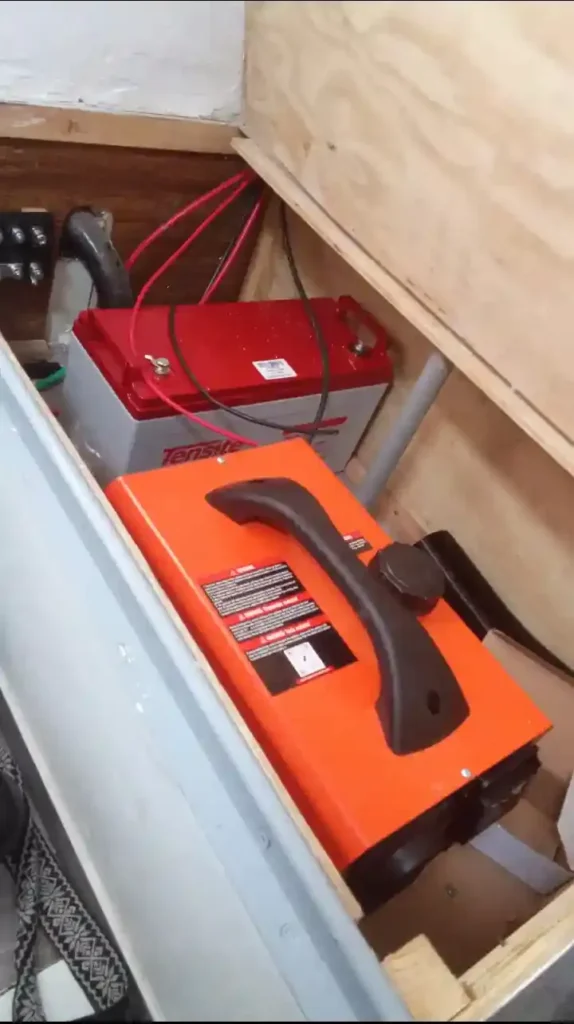
A year ago I chose a 150 Ah AGM over a lithium bank, for one reason: lithium cost roughly double, and I didn’t want to spend that upfront for the consumption I expected to have. It looked like the sensible, conservative choice. Bigger number on the label, half the price.
I regret it completely.
Start with what I actually bought
My 150 Ah AGM gives me 75 Ah of usable capacity — half of the label, because that’s what lead-acid allows.
A 100 Ah lithium would have given me 90 Ah.
So the smaller, “less” battery would have delivered 20 % more usable energy than the larger one I chose. I paid for 150 Ah, carried the weight of 150 Ah, gave up the space for 150 Ah, and ended up with less than a 100 Ah lithium would have given me on day one.
Then there’s how long it lasts
| AGM 150 Ah | LiFePO4 100 Ah | |
|---|---|---|
| Usable capacity | 75 Ah (0.9 kWh) | 90 Ah (1.15 kWh) |
| Realistic cycle life | ~500 cycles | ~3,000 cycles |
| Total energy delivered | ~450 kWh | ~3,450 kWh |
| Typical price | ~$280 | ~$550 |
| Cost per kWh delivered | ~$0.62 | ~$0.16 |
Lithium costs about double upfront and roughly four times less per unit of energy delivered over its life.
And my AGM isn’t going to reach 500 cycles. It’s under a year old and already degraded — resting voltage looks normal, but it collapses under any load, and its charge acceptance has halved. The winter of heater use, the summer of overnight fans and the shaded parking finished it. Which means my real cost per kWh is far worse than the table shows.
What I’d tell my past self
The upfront price was the only number I compared, and it was the wrong number. The right one is the cost of the energy you’ll actually take out of it before it dies.
And the honest version of that comparison isn’t “150 Ah AGM vs 100 Ah lithium at double the price.” It’s “75 usable amp-hours that will be gone in two years vs 90 usable amp-hours that will still be there in eight.”
If the upfront cost genuinely isn’t there, AGM is a working battery and I’m not going to pretend otherwise. But go in knowing you’re renting capacity, not buying it — and size it with at least 20 % more headroom than your calculation says, because lead-acid dies from being emptied, not from being used.
And be careful where that calculation came from. Appliance labels understate what actually leaves the battery — mine was out by around 50 %.
Where gel fits in
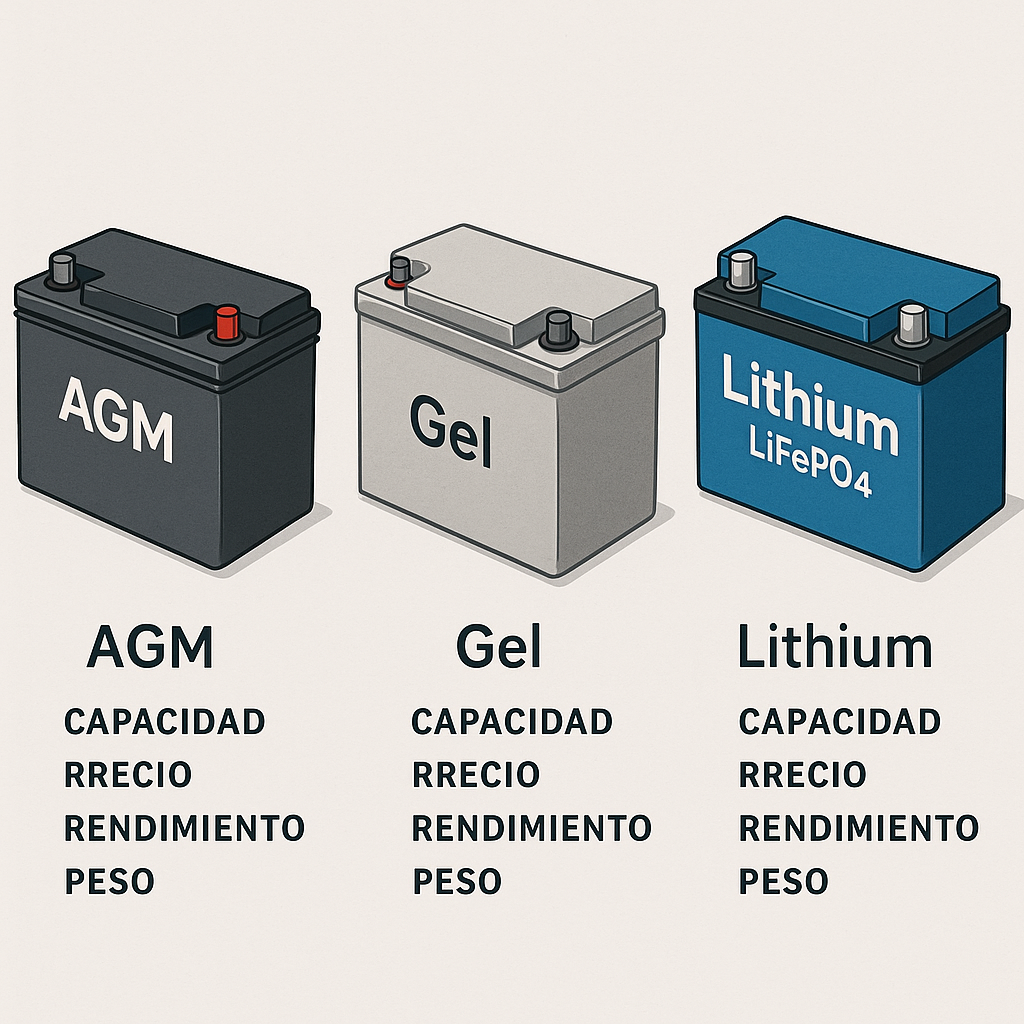
Gel is the third option nobody discusses much, and there’s a reason for that.
Gel batteries are lead-acid with the electrolyte suspended in a silica gel rather than absorbed into fiberglass mats. Compared with AGM:
- Better tolerance of deep discharge — the plates hold up somewhat better to being emptied
- Longer shelf life when stored unused
- Worse at delivering current — typically 0.2C, so a 100 Ah gel is uncomfortable above 20 A
- Much less tolerant of overcharge, and the damage is permanent
- More expensive than AGM, for less usable power
That third point rules it out for most camper builds. If you’re running an inverter of any size, gel will struggle where AGM merely complains.
Gel made sense when lithium was three times the price it is now. Today it occupies an awkward middle ground: costlier than AGM, weaker than AGM under load, and nowhere near lithium in usable capacity or life.
Where it still makes sense: low-current installations that sit unused for long periods and occasionally get deeply discharged. A weekend van with lights, a fan and a phone charger, parked for months at a time.
Setting up your charge controller for the battery you have
Every solar charge controller has a battery type setting, and getting it wrong is one of the quiet ways people destroy an expensive battery without ever realizing what happened.
Each chemistry wants different charging voltages:
| Type | Absorption | Float | Equalization |
|---|---|---|---|
| Flooded lead-acid | 14.4-14.8 V | 13.5-13.8 V | Yes, periodically |
| AGM | 14.4-14.7 V | 13.5-13.8 V | No |
| Gel | 14.1-14.4 V | 13.5-13.8 V | Never |
| LiFePO4 | 14.2-14.6 V | 13.5 V or none | Never |
What goes wrong in practice:
Gel set as AGM. The higher absorption voltage overcharges it. Gel electrolyte can’t be topped up, and gas generated inside cracks the gel structure. The damage is permanent and invisible from the outside — the battery simply loses capacity and you blame something else.
Lithium left on a lead-acid profile. Two separate problems. First, lead-acid profiles include periodic equalization at 15 V or above, which lithium must never see. Second, the sustained high float voltage keeps the cells at 100 % continuously, which is the condition lithium ages fastest under.
Lead-acid set as lithium. Undercharged. Never reaches full absorption, sulfates progressively, and dies early while looking fine on a voltage reading.
And the setting almost everyone forgets: temperature compensation.
Lead-acid batteries need charge voltage adjusted for temperature — higher when cold, lower when hot, typically around −20 mV per °C for a 12 V battery. Most controllers do this automatically and it’s correct behavior.
Lithium must not be temperature-compensated. LiFePO4 doesn’t need it, and in cold weather the controller will push the voltage higher than the cells should ever see. If you switch from lead-acid to lithium, turn temperature compensation off — it’s usually a separate setting from the battery type, and it doesn’t change on its own.
One extra step when connecting a controller
Always connect the battery first, then the panels. Every controller manual says this and it’s worth repeating: the controller reads the battery voltage to work out whether it’s on a 12 V or 24 V system. Connect the panels first and it may misidentify the system, or simply refuse to start.
And after connecting, check what it actually detected. A controller that has auto-selected 24 V on a 12 V bank will never charge properly, and the symptom looks exactly like a faulty panel.
Which one should you buy
Choose AGM if:
- Your total draw is modest — lights, a fan, phone charging, a small fridge
- You have no inverter, or a small one under 600 W
- The battery lives somewhere that freezes and you can’t move it inside
- The upfront money genuinely isn’t there
If that’s you, AGM works. Just size it with at least 20 % more headroom than your calculation suggests, and accept that you’re renting the capacity rather than buying it.
Choose lithium if:
- You run an inverter over 600 W, or anything with a compressor
- You live in the van full-time or for extended periods
- Weight or space is tight — a 100 Ah lithium is roughly a third of the weight of the AGM pair it replaces
- You want the money to make sense over more than two years
The typical breakdown by use:
| Setup | Realistic choice |
|---|---|
| Weekend van: lights, USB, small fridge | AGM 100 Ah is fine |
| Long weekends with a 12 V fridge running continuously | AGM 200 Ah, or lithium 100 Ah |
| Full-time living, laptop, compressor fridge | Lithium 200 Ah |
| Inverter over 1,000 W, power tools, coffee machine | Lithium, no realistic alternative |
| Air conditioning off-grid | Lithium 400 Ah minimum, and it’s still marginal |
And if you’re upgrading: don’t mix chemistries in the same bank. Ever. An AGM and a lithium wired in parallel will fight each other — different voltage curves mean one constantly tries to charge the other, and both age faster than either would alone.
Charging from the alternator: the cost nobody mentions
This is the part that catches people out after they’ve already bought the battery.
With lead-acid, charging from the engine was simple. A voltage-sensitive relay or a split-charge relay connected the two batteries once the engine was running, and that was the whole system — a hundred dollars or so, sometimes less.
With lithium, that setup doesn’t work, for two separate reasons.
Modern vehicles have smart alternators. They vary their output voltage to reduce fuel consumption, sometimes dropping to 12.3 V or lower once the starter battery is topped up. Lithium needs a stable voltage above 14 V to charge properly, so a simple relay leaves it permanently half-charged.
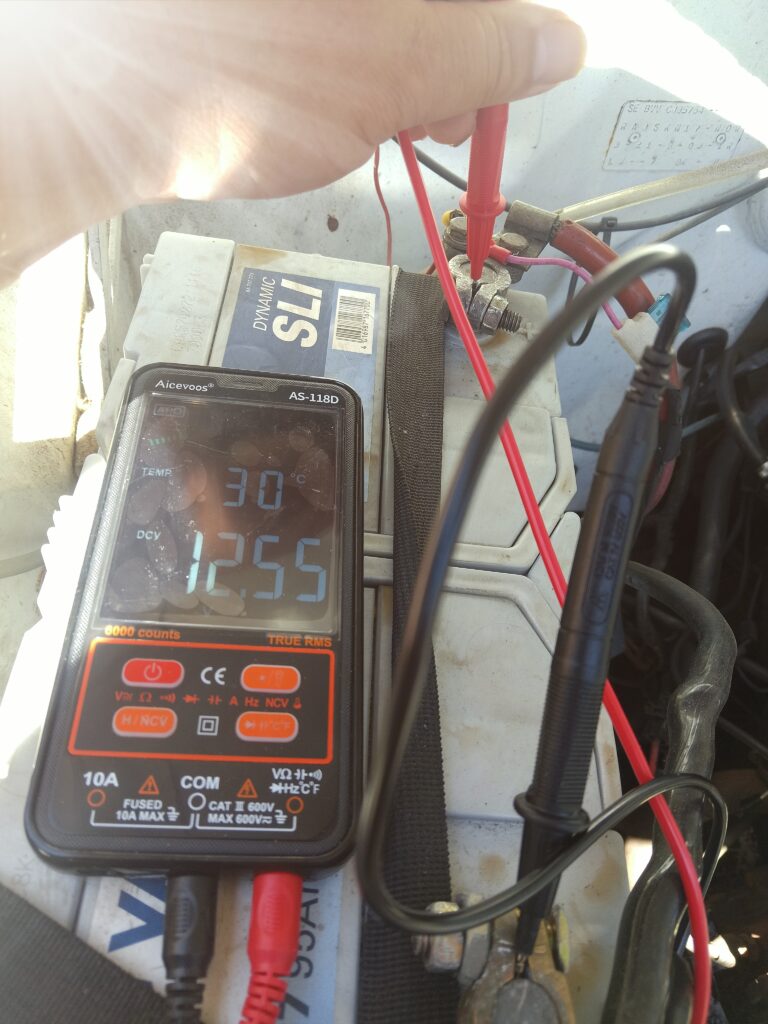
And lithium will happily destroy your alternator. A lead-acid battery limits its own charging current as it fills — its internal resistance rises and the current tapers. Lithium doesn’t. A depleted 200 Ah lithium bank connected directly will pull as much current as the alternator can produce, continuously, for as long as it takes. Alternators are designed for short bursts of high output followed by light loads. Sustained full output cooks them.
The answer is a DC-DC charger, which sits between the two batteries and does three jobs: it boosts the variable alternator voltage to a stable charging voltage, it limits the current to something the alternator can survive, and it applies a proper lithium charge profile.
The cost is $150 to $300 depending on whether you want 20 A, 30 A or 50 A. That’s on top of the battery, and it’s the line item that turns “lithium costs double” into “lithium costs double plus a charger I didn’t budget for.”
Worth knowing before you decide: if your van is old enough to have a conventional alternator and you’re staying with lead-acid, you can keep the relay you have. The moment you go lithium, budget the DC-DC charger as part of the battery purchase, not as an optional extra.
The BMS: why lithium dies suddenly and lead-acid fades
Every LiFePO4 battery contains a Battery Management System — electronics that monitor each cell and disconnect the battery if anything goes outside safe limits: too low, too high, too hot, too cold, too much current.
It’s what makes lithium safe to use. It also produces a behavior that surprises people the first time.
Lead-acid warns you. As it empties, the voltage falls steadily. Lights dim, the fridge cycles oddly, the inverter starts complaining. You get half an hour of clear signals that something is running out.
Lithium gives you nothing. It holds 13.2 V while you use it, performs perfectly, and then the BMS reaches its cut-off and everything switches off at once. No dimming, no warning, no gradual decline. From full performance to complete silence in a moment.
The first time this happens, most people assume the battery has failed. It hasn’t — it’s protecting itself, and it will come back as soon as it’s charged.
What this means in practice:
- You need a monitor. With lead-acid you can navigate by voltage and feel. With lithium the voltage tells you almost nothing until it’s too late, so a shunt-based battery monitor stops being a luxury.
- The BMS also blocks charging in the cold, as covered above. If your battery seems to refuse charge on a freezing morning, that’s the BMS doing its job, not a fault.
- A BMS cut-out under load — everything dying when you switch on something demanding — usually means the current limit was exceeded, not that the battery is empty. Check the BMS specification against your inverter draw.
Neither behavior is better than the other. But if you switch from lead-acid to lithium and expect the same warnings, you’ll be caught out once. Better to be caught out reading this than at midnight in a parking area.
Weight and payload
Easy to overlook until the van is on the weighbridge.
- 100 Ah AGM: 28-30 kg (62-66 lb)
- 100 Ah LiFePO4: 11-13 kg (24-29 lb)
But the honest comparison isn’t one against one. Since a 100 Ah AGM gives you 50 usable amp-hours and a 100 Ah lithium gives 90, matching one lithium means two AGMs.
So the real figure is roughly 60 kg of AGM against 12 kg of lithium — a difference of about 48 kg, or 105 lb, for the same usable energy.
In a converted van that matters more than it sounds. Payload is the difference between the vehicle’s gross weight rating and what it already weighs, and by the time you’ve added insulation, furniture, water, a heater and your belongings, there’s usually less left than people expect. Fifty kilos of battery you didn’t need is fifty kilos of water, tools or gear you can’t carry.
It’s also fifty kilos sitting in one place, which affects how the van handles and where you have to mount it.
And the space. Two AGMs need roughly twice the footprint of one lithium, in the part of the build where space is most contested — low down, near the electrical panel, somewhere ventilated and accessible.
If you’re planning the layout before buying, this is worth deciding early. Designing a compartment for two large AGMs and then switching to lithium leaves you with an oversized hole; doing it the other way round leaves you with nowhere to put the batteries.
Frequently asked questions
Is lithium worth it over AGM in a camper van?
If you run an inverter above 600 W or live in the van for extended periods, yes. A 100 Ah lithium delivers about 90 usable amp-hours against 50 from a 100 Ah AGM, holds voltage under load, and lasts roughly six times as many cycles. Over its life it works out around four times cheaper per kilowatt-hour delivered, despite costing about double upfront.
How much of a 100Ah AGM can I actually use?
About 50 amp-hours. Taking a lead-acid battery below 50 % regularly shortens its life significantly. Lithium of the same nominal capacity gives you 80-90 amp-hours, which is why a “smaller” lithium often delivers more usable energy than a larger AGM.
Can I charge a lithium battery in freezing weather?
No. Charging LiFePO4 below 0 °C causes permanent damage, and any decent BMS will block it. Discharging is fine down to around −20 °C. The solutions are a self-heating battery or, more simply, keeping the battery inside the insulated living space rather than in an exterior locker.
· Do I need to change my solar controller settings for lithium?
Yes, and it’s more than just selecting “lithium” in the battery type menu. You also need to disable temperature compensation, which is usually a separate setting. Lead-acid profiles raise charge voltage in cold weather, and applying that to lithium pushes the cells above where they should ever be.
· Can I mix an AGM and a lithium battery in the same system?
Not in the same bank. Their voltage curves are different enough that they’ll continually try to charge each other, and both will age faster. If you need two banks for separate purposes, keep them electrically separate with their own charging.
How do I know my AGM is degrading?
Two signs. Resting voltage looks normal but collapses the moment you apply any load. And charge acceptance drops — if your charger used to push 30 A into the battery and now tapers to 15 A within minutes, internal resistance has risen and the battery is on its way out.
[…] ¿Prefieres verlo en inglés? Aquí tienes la comparativa equivalente entre AGM y litio: AGM vs Lithium in a Camper Van → […]
[…] AGM vs Lithium in a Camper Van: What the Difference Actually Looks Like […]
[…] AGM vs Lithium in a Camper Van: What the Difference Actually Looks Like […]
[…] AGM vs Lithium in a Camper Van: What the Difference Actually Looks Like […]
[…] AGM vs Lithium in a Camper Van: What the Difference Actually Looks Like […]
[…] AGM vs Lithium in a Camper Van: What the Difference Actually Looks Like […]
[…] AGM vs Lithium in a Camper Van: What the Difference Actually Looks Like […]
[…] Check the battery’s BMS rating. Some 100Ah batteries have a 100A BMS — fine for a 1000W inverter, but potentially not enough for 1500W or 2000W. A 2000W inverter can demand more than 170A; if your battery’s BMS is capped at 100A, the system may cut out for protection. In that case, the problem isn’t the cable — the battery simply isn’t built for that inverter. If you’re weighing battery options with this in mind, see AGM vs Lithium in a Camper Van. […]
[…] AGM vs lithium: what the difference looks like in use […]
[…] AGM vs Lithium in a Camper Van: What the Difference Actually Looks Like […]
[…] AGM vs Lithium in a Camper Van: What the Difference Actually Looks Like […]