
You can add a second solar panel without changing your charge controller only if the controller can handle the new total. Divide the combined panel watts by 14 V to get the amps, and if the panels are wired in series, check the controller’s maximum PV open-circuit voltage (Voc). If the panels are very different, give each one its own MPPT controller, which is what I did on my motorhome.
My experience expanding the solar system on my motorhome
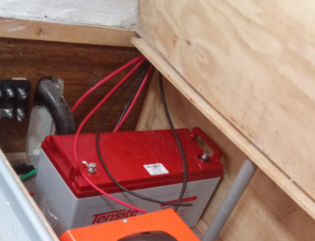
When I bought the motorhome it came with a single 87 W solar panel on the roof. The panel cables were loose inside the vehicle and not connected to any charge controller or battery.
The first thing I did was insulate the end of each wire with its own terminal block, so nothing could short while I checked the rest of the installation.
Then I measured the free space on the roof to see how big a panel would fit without getting in the way of the skylights, the antenna or anything else up there.
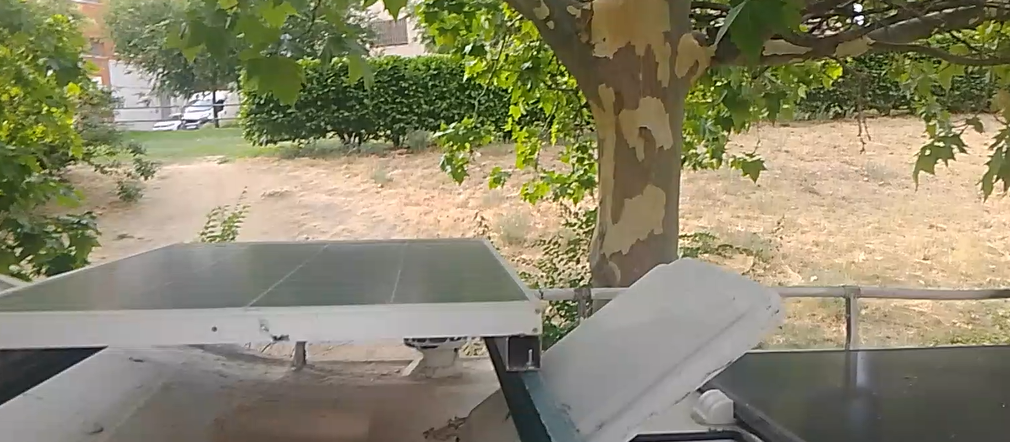
I already had a 150 Ah AGM battery, and after looking at how much power the motorhome uses, I decided to add a second panel, a 200 W one.
Instead of putting both panels on one controller, I fitted a separate MPPT controller for each panel. That way each panel works on its own and I get more out of whatever sun it receives.
Today the original 87 W panel and the new 200 W panel charge the same 150 Ah AGM battery through two independent MPPT controllers, with both controller outputs wired in parallel to the battery.
If you want to see the whole system, including controllers, battery, inverter and protections, I explain it in how to wire an auxiliary battery in a camper van.
Quick comparison: ways to expand a camper solar system
| Option | When it makes sense | Main advantage | What to check |
|---|---|---|---|
| Add a panel to the existing controller | The controller can take more power and the panels are compatible | Cheapest and simplest | Controller’s max power, voltage and current |
| One controller per panel | The panels have different power or characteristics | Each panel works independently | Both controllers set to the same battery type |
| Replace the controller with a bigger one | The current one is too small but you want to keep the panels | One unit handles more production | Compatibility with the panels, battery and cables |
| Replace the old panel | It takes up a lot of space, produces little or is worn out | Simpler install, fewer connections | Roof space and the new panel’s power |
Will your controller take another solar panel?
You don’t need complicated maths. In most camper systems you only check two things on the controller: its maximum current and its maximum input voltage.
1. Maximum current (amps)
The quickest way is to divide the total watts of your panels by the charging voltage of the battery, which is roughly 14 V on a 12 V system.
Amps = total panel watts ÷ 14 VExample 1. You have a 100 W panel and add another 100 W panel.
100 W + 100 W = 200 W
200 ÷ 14 = 14.3 A
A 20 A MPPT controller is enough here.
Example 2. You want 200 W + 200 W.
400 W
400 ÷ 14 = 28.6 A
Now you want a 30 A controller or bigger.
2. Maximum input voltage (Voc)
Even if the current is fine, the controller also has to survive the voltage your panels produce, especially when they are wired in series.
In series, the voltages add up. Two panels of about 18 V working voltage give roughly 36 V, and the open-circuit voltage (Voc) printed on the panel label is higher than that. Compare the total with the controller’s rating, which the manufacturer lists as Max PV Open Circuit Voltage or Maximum PV Voc.
In parallel, the voltage stays the same and the currents add up. In that case, look at the controller’s Maximum Charge Current instead.
Always read the manufacturer’s specifications before you buy the second panel.
Can you mix solar panels of different power?
Yes, but before you put them on the same controller, adding up their watts is not enough. You also have to compare their working voltage (Vmp), their open-circuit voltage (Voc) and their current.
In parallel, the voltage stays the same and the currents add up, so the panels should have similar working voltages. In series, the voltages add up and the current of the whole string is limited by the panel that delivers the least.
In my case I had an old 87 W panel and added a 200 W one. Their characteristics were different, so I connected each panel to its own MPPT controller and let them work independently.
Two controllers on one battery: how it is wired
The panels are not connected to each other. What is connected in parallel are the outputs of the two controllers: both positives go to the battery’s positive terminal and both negatives to the negative terminal.
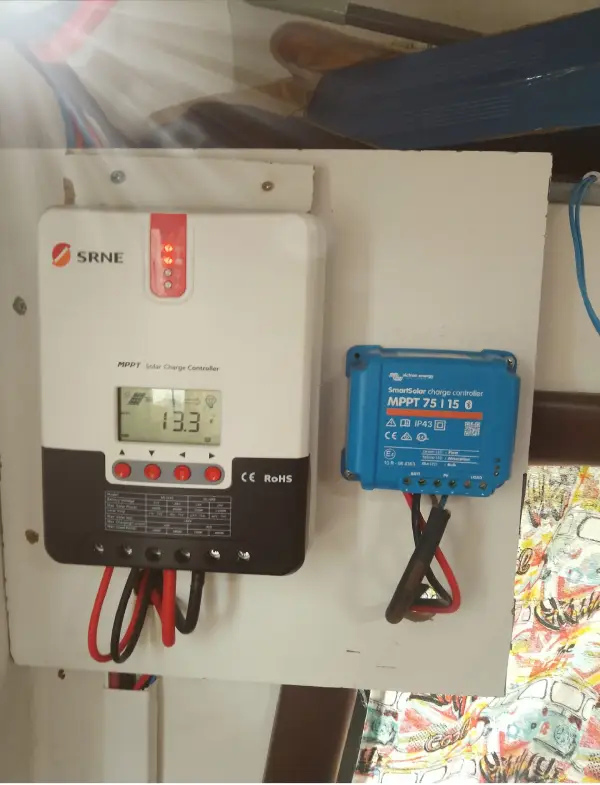
Their output voltages do not add up. Both controllers work on the common battery voltage, while their charging currents do add up, depending on how much each panel is producing at that moment.
The two controllers don’t have to be the same model or the same power. What matters is that both:
- are made for the battery’s voltage (12 V in my case) and accept its type (AGM),
- are set to the same charging profile, and
- can be handled by the battery, which has to accept the total charging current.
Both of mine are set to the same AGM profile for the 150 Ah battery.
The other catches of running two controllers on one battery, including a diagnostic trap I fell into, are in MPPT vs PWM for campers.
Cables and fuses for the second controller
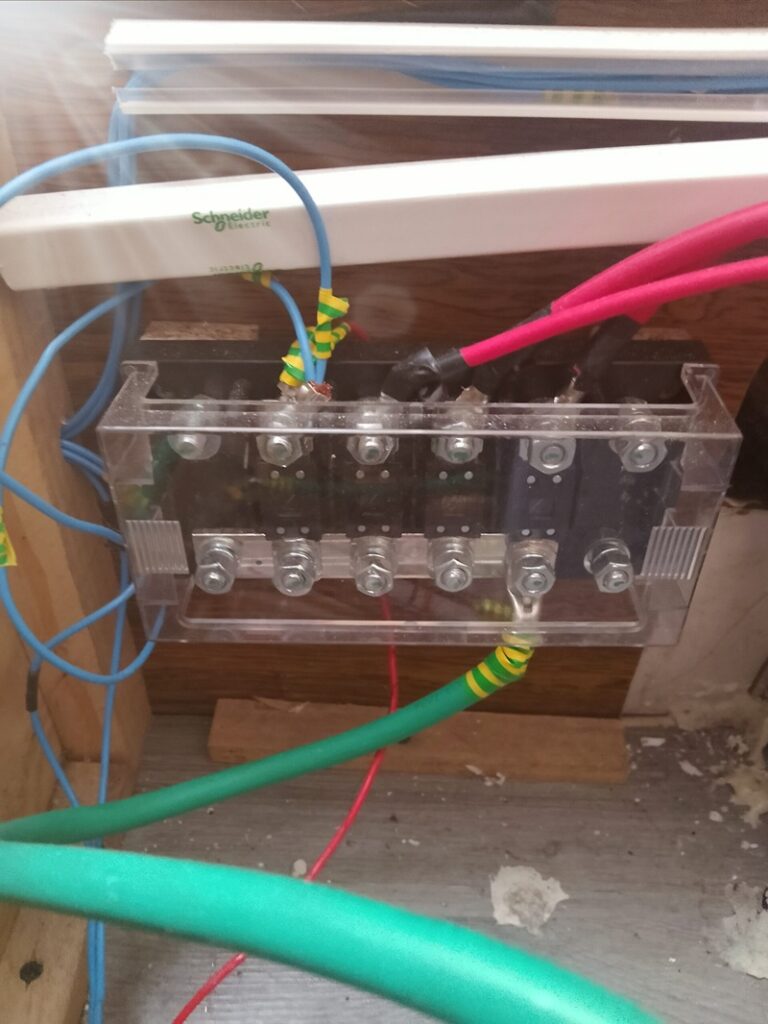
A second controller means a second charging line to the battery. Each controller has its own output cables, and each positive line needs its own fuse close to the battery.
The fuse is not chosen by the panel’s watts. You choose it from the controller’s maximum current and the cross-section of the cable it has to protect.
The cable size can’t be one fixed number either. It depends on the amps, the total length of the run and the voltage drop you accept. You can check yours with the wire gauge calculator for 12V systems.
Try not to pile too many terminals straight onto the battery posts. With two controllers, an inverter and other equipment, a properly sized busbar keeps the connections tidy and lets you protect each circuit separately.
Other ways to expand a camper solar system
Add a second panel to the same controller
This is usually the simplest option when the controller you already have can take more power than you are using now.
Both panels go to the same controller and one unit manages all the energy. It is cheap and has fewer parts, but first check that the controller can handle the combined current of the two panels.
Fit a separate controller for each panel
This is the solution I use on my motorhome. Each panel has its own MPPT controller and both charge the same auxiliary battery.
The advantage is that you can use different panels without changing much of the existing installation. And if one panel is partly shaded, the other keeps working on its own.
Replace the old panel with a bigger one
Sometimes a second panel isn’t worth it. If the existing panel is old, low-powered or worn out, it can make more sense to take it off and put one modern, more powerful panel in the same roof space.
That simplifies the installation and cuts the number of connections and components.
Fit several panels for much more autonomy
With heavy loads, such as a powerful inverter, a compressor fridge, laptops or long periods without hookup, several panels can be worth it.
The aim is no longer to top up the battery but to generate as much energy as possible during the day.
What to check before you expand your solar system
Before you buy another panel, check three things:
- the controller can handle the new total power,
- the battery has enough capacity to store what the panels will produce, and
- the rest of the installation, cables and fuses included, is sized for it.
If you have doubts about any of them, these guides help:
- MPPT vs PWM: which charge controller to choose
- AGM vs lithium for camper vans
- How many amp-hours do you need for a camper van battery
- How long it takes to charge a camper battery with solar
- Solar panel not charging the battery? Find the fault in five measurements
Frequently asked questions
Can I add a second solar panel without changing the controller?
Yes, as long as the controller can handle the power, current and voltage you get from connecting both panels. Check the maximum PV power, the maximum charge current and the maximum input voltage (Voc) in the manufacturer’s specs. If the controller is too small or the panels are very different, you can fit a second, independent controller.
Can I connect two different solar charge controllers to the same battery?
Yes. They don’t have to be the same brand or power, but both must suit the battery’s nominal voltage and technology, which in my case is a 12 V AGM battery. Each panel connects only to its own controller, and it is the controller outputs that are wired in parallel to the battery. Their voltages don’t add up, because both work on the common battery voltage, while the charging currents they deliver do add up. Each positive line needs its own fuse.
What is the cheapest way to expand a solar system?
It depends on what you already have. If the controller can take more power, adding a second panel is usually the cheapest. In other cases it can be better value to replace the controller or the old panel.
Is it better to add more solar panels or a bigger battery?
If the battery already reaches a full charge every day, more capacity can be a good move. If it never fills up because there isn’t enough production, expand the solar first.
Can I expand a solar system in stages?
Yes. Many systems grow step by step: first another panel, then a bigger battery or a second controller, depending on your needs and budget.
When is it worth replacing the old solar panel?
When it has low power, is worn out or takes up a lot of space for the energy it produces, a modern, higher-output panel can be a better option than adding another one.