
How many Ah you need in your camper battery, calculated from your actual loads (lights, fridge, chargers, inverter) — not a generic number pulled off a forum. Here’s the formula I use myself, with real examples, so you don’t undersize your bank or pay for capacity you’ll never use.
“I killed a perfectly good AGM running a 230 V fan overnight through an inverter. That’s the kind of mistake this site is built to save you from.” — Gustavo, why I measure everythingStart here: Size your inverterWork out your consumptionFix what’s broken
What “Ah” actually means on a battery
Amp-hours (Ah) measure a battery’s charge capacity. To know the actual usable energy, you also need the voltage:
Ah × volts = Wh
A 100 Ah battery in a 12V system stores roughly 1,200 Wh nominal.
In theory, a 100 Ah battery could supply 10A for 10 hours — but the capacity you can actually use depends on the battery chemistry, temperature, discharge rate, and the manufacturer’s own limits. On an AGM you shouldn’t normally go past 50% depth of discharge; a LiFePO₄ lets you use roughly 80–90%.
Example: real daily loads in a camper van
| Load | Approx. power | Daily use | Daily consumption |
|---|---|---|---|
| LED lights | 10W | 4h | 40 Wh |
| 12V fridge | ~40W | 10h real runtime | 400 Wh |
| Phone charging | 10W | 2h | 20 Wh |
| Laptop | 60W | 2h | 120 Wh |
| Water pump | 40W | 10 min | 7 Wh |
| Fan | 20W | 5h | 100 Wh |
| Inverter, no load | 8W | 5h | 40 Wh |
| Propane furnace fan* | ~60W (4–7A) | 2h running | ~120 Wh |
| Total | 727 Wh/day (847 Wh with furnace) |
This example won’t match every setup — it’s here to show the method. What matters is replacing these numbers with your own van’s real loads.
The furnace figure isn’t something I’ve measured myself — it’s the range several RV owners report for a propane furnace blower motor. If yours runs on diesel (Webasto/Eberspächer) rather than propane, check the actual draw instead of using this number.
If you don’t yet know your real daily Wh, run your own devices through my power consumption calculator — power rating and hours of use per device. Once you have that number, come back here and turn it into Ah based on your autonomy days and battery type.
The table above adds up to 727 Wh/day. To walk through the formula step by step, I’ll use a simpler 560 Wh/day example — just lights, fridge, and laptop.
Step 1: work out your daily consumption
First you need to know how many Wh you use per day:
Device power (W) × hours of use = Wh/day
Typical example:
- Lights → 40 Wh
- Fridge → 400 Wh
- Laptop → 120 Wh
Total: 560 Wh/day
Step 2: work out your autonomy
Decide how many days you want to go without recharging.
Example: 560 Wh × 2 days = 1,120 Wh
Step 3: convert to Ah
Formula: Wh ÷ 12V = Ah
1,120 ÷ 12 = 93 Ah
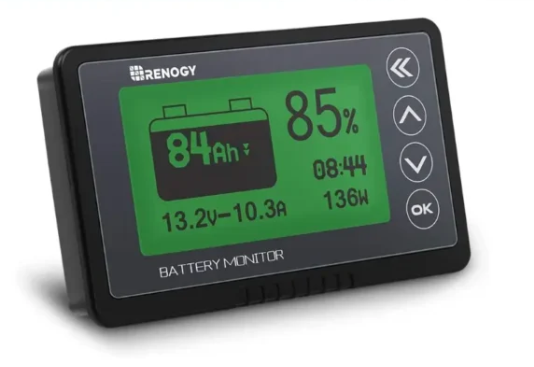
One thing this simple math doesn’t capture: anything you run through an inverter draws more than its label says, because the DC-to-AC conversion itself isn’t free. I go into why in sizing your inverter — a 46W fan of mine actually pulled 65–85W once it went through the inverter, mostly because efficiency collapses at low load.
Step 4: adjust for your battery chemistry
This is the part that actually decides what you buy.
If you’re still deciding between the two, I go into the real trade-offs — cost, weight, lifespan, cold-weather behavior — in AGM vs Lithium in a Camper Van.
🔋 AGM
You can only use about 50% of rated capacity, so you need roughly double: 93 Ah ÷ 0.5 = 186 Ah.
In practice: 93 Ah of real need → look at a 180–200 Ah AGM bank.
🔋 Lithium (LiFePO4)
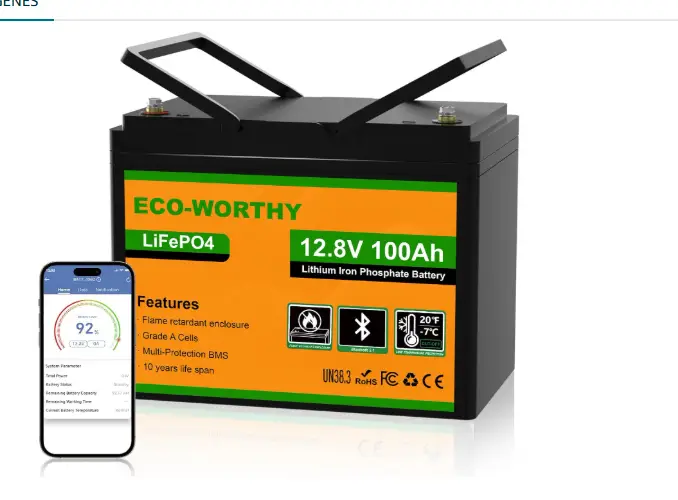
You can use 80–90%, so you need less capacity: 93 Ah ÷ 0.85 = 109 Ah.
In practice: 93 Ah of real need → around 120 Ah of lithium.
Step 5: add a buffer for bad solar days
If you charge mainly with solar, don’t size the battery only for a perfect sunny day. Cloudy, rainy, or short-daylight days will still happen — size for 1–2 days of autonomy without meaningful solar input, not just the average.
| Autonomy target | Multiplier | 93 Ah/day example |
|---|---|---|
| Sunny-day average only | × 1 | 93 Ah |
| 1 day without real solar | × 1.5 | ~140 Ah |
| 2 days without real solar | × 2 | ~186 Ah |
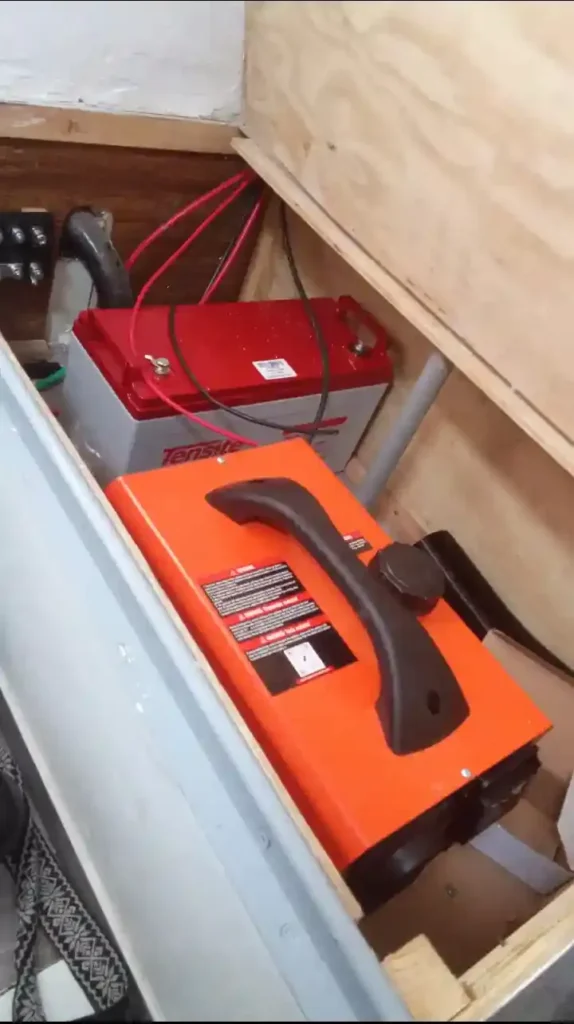
This is exactly what caught me out with the Tensite: on paper the daily math looked fine, but a stretch of overcast, rainy days meant the panel never actually finished a recharge — and the battery just kept sliding further behind.
The fridge is usually your biggest consumer — check it first
On most van builds, the compressor fridge alone accounts for 30–50% of daily consumption — more than lights, chargers, and the water pump combined. Before you size anything else, check your fridge’s actual average draw from its datasheet or product listing; a well-insulated compressor fridge typically averages 25–50W, but a poorly insulated box or a hot, sun-exposed van can push that noticeably higher.
Run your specific fridge (and everything else) through my power consumption calculator before committing to a battery size — it’s the single load most likely to throw your whole calculation off if you estimate it instead of checking it.
The common mistake
Assuming more Ah is always better. What that actually gets you:
- Unnecessary cost
- Extra weight
- An oversized, harder-to-charge system
Why sizing this correctly actually matters
A common mistake is sizing a system so tight that the leisure battery constantly works near its limit — forcing you to recover large amounts of energy every day through solar, the alternator, a booster, or even a portable station. The problem isn’t recharging daily (that’s actually recommended after use) — it’s repeated deep discharges, or leaving the battery for long stretches without ever reaching a full charge. On AGM batteries that kind of use can shorten lifespan noticeably; LiFePO₄ handles those cycles far better, though a properly sized system always helps both battery life and real-world autonomy.
Sizing the Ah is only part of it. Just as important is matching the battery chemistry to how you actually use the van — they don’t all perform the same under the same load.
What my own batteries have actually taught me
My first van was a 2005 Ford Transit, and I ran a 100 Ah AGM in it for five years. It didn’t die from age or normal use — a regulator terminal burned out and the voltage crashed to around 2V. The shop recharged it back up to roughly 12.8–13V and it kept working after that, but weak — it would hold some charge but drop fast under any real load. That’s actually a lot like the 150 Ah battery I have now: it still works, but nowhere near like a healthy one.
The battery in the motorhome now is a 150 Ah Tensite with bolted M10 terminals. In full sun it takes about two whole days to climb back up to 14.4V — but it discharges much faster than that, and the reason is on me, not the battery: through winter I ran the heating every night, and on top of that plenty of full days were rainy and overcast, so the solar panel never actually finished the recharge either. Then when summer came I kept a fan running all night with the van parked in the shade. Within a few days the battery was down to 11.8V, and I kept doing that almost daily until I finally moved the fan’s power source over to an EcoFlow and a Jackery instead — which let me keep using it at night without draining the leisure battery any further.
The lesson isn’t really about Ah at all: a battery that’s been through repeated deep discharges behaves like a smaller one than its rating says, no matter how carefully you sized it on paper.
Conclusion
Knowing how many Ah you need comes down to your real daily consumption and picking the right battery chemistry for it — not a number someone else quotes you.
Still not sure you’re sizing it right?
Working out the Ah is only step one. What matters more is sizing the whole system around your actual use. The mistakes I see most: getting the daily consumption wrong, choosing a battery by gut feeling, running out of autonomy, or spending money on capacity you’ll never touch.
→ Get in touch and I’ll walk through your actual numbers with you
FAQ
How many Ah does a camper need for a weekend?
It depends on daily consumption. At 500 Wh/day, a weekend needs roughly 1,000 Wh — without counting recharging, that’s about a 180–200 Ah AGM bank or 110–120 Ah of lithium, with a small safety margin.
How many Ah do I need for a 12V fridge?
It depends on real compressor runtime. A fridge averaging 40W over 10 hours uses about 400 Wh/day — 33 Ah on a 12V system. To run just the fridge for one day you’d need roughly 70 Ah AGM or 40–50 Ah lithium, before adding anything else.
Is a 100 Ah battery enough for a camper van?
It can be, for moderate use and short trips. A 100 Ah AGM gives you roughly 600 Wh usable if you don’t discharge past 50%. A 100 Ah lithium gives you roughly 1,000–1,100 Wh usable — nearly double the real-world autonomy.
How many Ah of AGM equal 100 Ah of lithium?
A 100 Ah lithium battery typically gives you 80–90 Ah usable. To get similar usable capacity from AGM you’d need roughly 160–180 Ah, since AGM shouldn’t normally go past 50% depth of discharge.
How many days does a 100 Ah battery last in a camper?
Divide the battery’s usable energy by your daily consumption. At 500 Wh/day, a 100 Ah AGM gives you about 1.2 days; a 100 Ah lithium gets closer to two days. These are rough figures and don’t include what solar or the alternator puts back in.
Should I size a camper battery in Ah or Wh?
Work out daily consumption in Wh first — it lets you add up devices with different wattages and run times. Then convert to Ah using your system voltage, your autonomy days, and your battery’s usable percentage.
[…] How many Ah does your camper battery actually need? […]
[…] How many amp-hours do I need […]
[…] How many amp-hours do you need for a camper van battery […]