
21 oct 2026 · @gustavo
Reversing polarity in a camper can do anything from nothing to frying several components at once, depending on what was connected and for how long. A fuse won’t protect you from it by itself, many solar controllers, inverters and chargers have built-in reverse-polarity protection but cheap ones may not, and the most dangerous case is connecting batteries in parallel or a charger the wrong way round. If you see sparks, smell burning or a fuse blows straight away, disconnect the power source immediately.
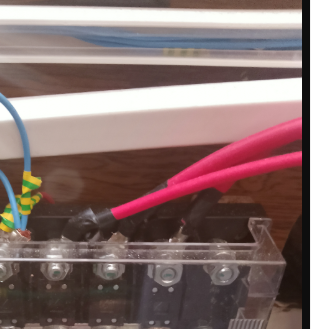
Connecting the polarity the wrong way, with positive and negative swapped, is one of the most common mistakes when you work on a camper’s electrical system, especially when reconnecting a battery, changing a fuse or installing a new component. In this guide I go through what really happens, which signs tell you it has already happened, and how to check and fix it without damaging more than you have to.
What happens if you reverse the polarity
It looks like a small slip, but depending on what is connected at that moment, the result can go from nothing happening to several components being fried at once. This is what to expect from each part of the system:
- Fuses. In most cases a fuse does not protect against reversed polarity. It lets the current through all the same, so you won’t find out from the fuse.
- Solar controllers, inverters and chargers. They usually have internal reverse-polarity protection and cut out on their own, but some cheaper models don’t, and they can be permanently damaged the moment you connect them.
- LED lights and low-voltage electronics. With reversed polarity they simply don’t light up. There is usually no damage if you correct it quickly.
- Water pumps and motors. They may run backwards or not start, but normally they are not damaged by a single wrong connection.
- Batteries. Reversing the polarity when you connect two batteries in parallel, or when you use a charger, is the most dangerous case. It can cause a severe short circuit, sparks, overheated cables and, in the worst case, a swollen or leaking battery.
The real risk is not so much what happens as how long it stays connected that way and what was in the circuit at the time. A half-second reversal while making a quick connection is not the same as leaving the system running like that for hours.
Signs you’ve connected the polarity the wrong way
- A spark or crackling at the moment you connect.
- A smell of burning or hot plastic.
- A fuse that blows as soon as you switch the circuit on.
- A component (controller, inverter, charger) that doesn’t turn on and doesn’t respond again afterwards.
- Cables that heat up quickly to the touch near the connection.
If you notice any of these signs, disconnect the circuit immediately before you keep checking.
What to do if you’ve already connected it backwards
- Disconnect the power source (battery or charger) before you touch anything else.
- Check the fuse closest to the connection point. If it blew, that’s a good sign: it did its job and probably protected the rest of the installation. A fuse that blows when you connect can also have other causes, so see why the fuse keeps blowing in a camper 12V system.
- Inspect the cables and connectors for burn marks, melted plastic or discolouration.
- Reconnect with the correct polarity, once you’ve made sure there is no visible damage, and check that the affected component (controller, inverter, etc.) works.
- Always check positive to positive and negative to negative before you apply power, not after.
How to avoid it in the future
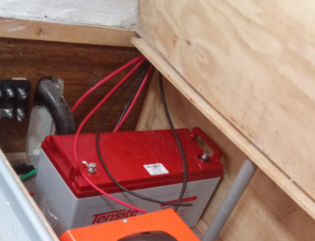
- Label the positive and negative cables at the points where you connect often: the battery, the fuse panel and the controller.
- Use connectors that can’t be connected the wrong way round, such as MC4 connectors on solar panels, whenever the equipment allows it.
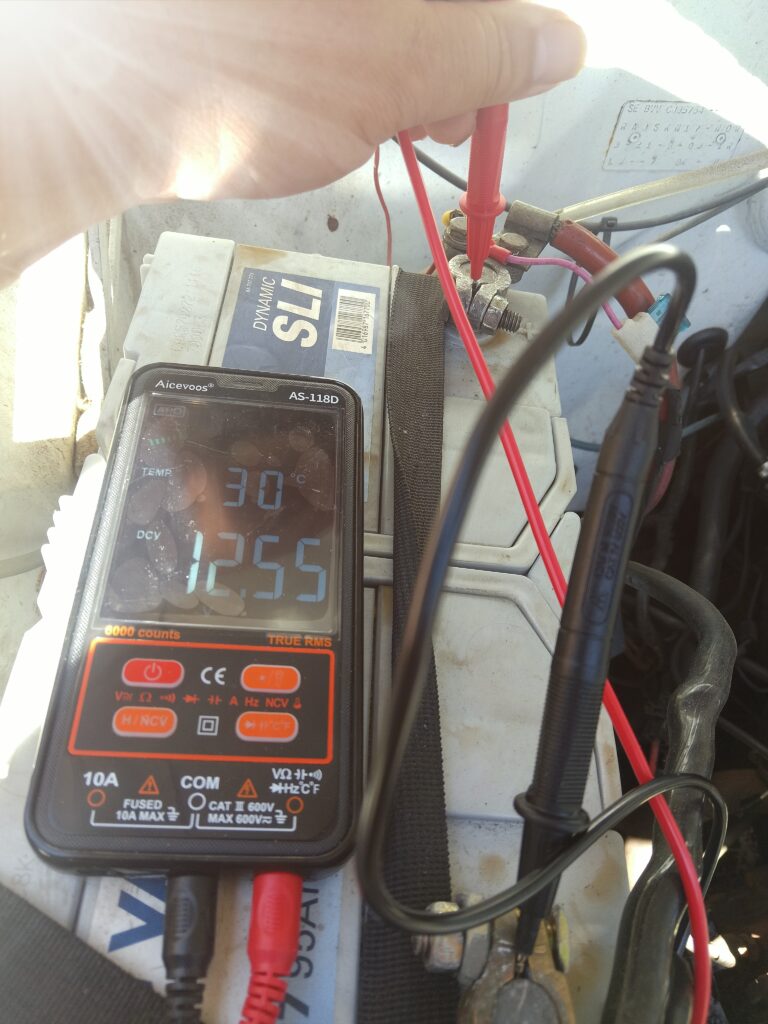
- Before you connect any new component, check with a multimeter which cable is which if it isn’t clearly marked.
- If you work on the installation often, a properly sized fuse close to the battery is the first line of defence. I explain it in detail in where to place fuses in a 12V camper electrical system.
My own experience with reversed polarity
It happened to me once when I connected a small inverter straight to the battery with crocodile clips, to test it before fitting it permanently. Without looking closely, I put the red clip on the negative terminal and the black one on the positive.
When I connected it, the inverter didn’t turn on: no indicator light, no fan, nothing at all. For a moment I thought it had come faulty from the factory. I disconnected it, checked the clips and saw my mistake: they were the wrong way round.
When I corrected it and connected it again with the right polarity, the inverter started without a problem. I was lucky that nothing else happened, because I noticed straight away and didn’t leave it connected like that. But since that day I always mark with a marker which clip goes on which terminal before doing quick tests.
Frequently asked questions
Can a component I connected with reversed polarity be repaired?
It depends on the component and on whether it had internal protection. If it had reverse-polarity protection, which many solar controllers and inverters do, it simply cuts out and works again once you reconnect it correctly. If it didn’t, the damage is usually permanent.
Does a fuse protect against reversed polarity?
Not directly. A fuse protects against overcurrent, not against current flowing the wrong way. It can blow if the reversal causes a short circuit, which limits the damage.
Is it dangerous to reverse the polarity of a battery?
Yes, it’s the most delicate case. It can cause a short circuit with sparks and heat and permanently damage the battery. Always check positive and negative before you connect, especially with lithium batteries that have a BMS.
How do I know which cable is the positive if it isn’t marked?
Use a multimeter in volts mode and measure between the cable in question and a known ground, such as the van’s chassis. The positive cable will show a positive reading against ground.
Back to the complete camper van electrical system guide