
I’m an electrician by trade. I converted my own van in 2018, and a work accident later turned that van into my full-time home. Everything below comes from faults I’ve measured myself — not theory copied from a manual.
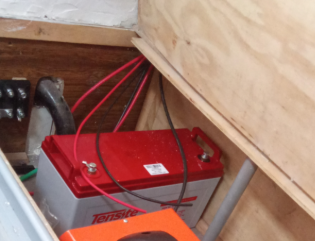
If your battery is draining, your solar isn’t charging, your fuses keep blowing, or your inverter cuts out, you’re not alone. These are the same seven faults I see over and over in camper electrical systems, and most of them can be diagnosed with nothing more than a multimeter and twenty minutes.
“I killed a perfectly good AGM running a 230 V fan overnight through an inverter. That’s the kind of mistake this site is built to save you from.”
The 7 most common electrical faults in campers
1. Battery drains too fast
Typical causes: undersized battery, hidden loads, an aging battery, or a badly configured charge controller.
Typical symptom: voltage drops overnight even with nothing running.
Pick based on your exact symptom:
- Battery drops even when you’re not using anything → Camper battery draining overnight? Find the parasitic draw
- You charge it fully but it dies fast anyway → Why My AGM Battery Died in Under a Year
| Resting voltage | State |
|---|---|
| 12.7–12.8V | Fully charged |
| 12.4–12.5V | Half charge |
| 12.1–12.2V | Low |
| 11.9V or less | Very low |
These are approximate — chemistry, temperature, and rest time all shift the numbers. Don’t measure right after charging or with a load connected if you want a reliable reading.
Resting voltage reference (12V lead-acid/AGM):
Real measurement: on my own AGM (100Ah), toward the end of its life it started sagging to 11.8V under load from the heater at startup — a clear sign the battery had hit its real limit, not a one-off glitch.
2. Solar panel isn’t charging properly
Typical causes: an inefficient PWM controller, a dirty or shaded panel, wrong wiring, a blown fuse.
Typical symptom: the sun is out, but battery voltage doesn’t move.
Full walkthrough here: Solar panel not charging? Find the fault in five measurements
If the panel and wiring check out but the controller itself won’t push charge → Solar controller not charging
Real measurement: one night I lost all power and found a terminal on the controller had melted. I measured just over 2V — a value I’d never seen before. I couldn’t confirm afterward whether it was the panel-side or battery-side terminal, and I hadn’t measured per-circuit current, so I can’t say for certain whether the drain came from the controller itself or something else still pulling from the battery. What I could confirm was the melted terminal.
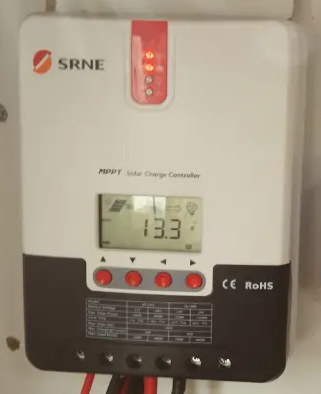
The real lesson isn’t “the controller broke” — it’s that constant road vibration is a silent enemy of every electrical connection. A terminal that’s tight today may not be in a few months, and it tends to fail exactly when you’re pulling the most current (heater on), not during a quiet moment.
What to do about it: check your controller’s terminals periodically for discoloration or a burning-plastic smell before they get to melting point. This isn’t a one-time check — it’s recurring maintenance.
3. Fuses blow or burn out repeatedly
Typical causes: wire too thin for the load, short circuits, poor load distribution, wrong fuse rating.
Typical symptom: lights or outlets suddenly stop working.
- Suspect the wire itself → Undersized wire: the symptoms and a ten-minute test
- Fuse between battery and inverter → What fuse size do you need between battery and inverter
- Still blowing after checking wire and rating → Why does the fuse keep blowing in my camper’s 12V system?
- Not sure where the fuses should even sit → Where to place fuses in a 12V camper electrical system
Not all fuses are the same: blade fuses protect the panel circuits — lights, water pump, fridge — and come cheap in assorted packs. ANL or MEGA fuses go on the heavy battery-to-inverter line, and those you buy individually, at the exact rating you need.
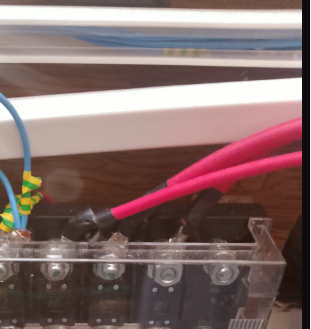
The fuse protects the wire, not the appliance. Fitting a higher rating because the old one kept blowing is exactly how fires start.
4. Inverter shuts off or beeps
Typical causes: low battery, consumption spikes, undersized cables, an inverter oversized for the rest of the system.
Typical symptom: it runs for a few minutes, then cuts out.
Full breakdown: Why your inverter keeps shutting off — seven causes
5. Battery never reaches 100%
Typical causes: wrong controller, insufficient charging, wrong battery-type setting, a degraded battery.
Typical symptom: voltage stalls at a fixed point (say, 13.2–13.4V) and won’t climb further, even with hours of good sun or shore power.
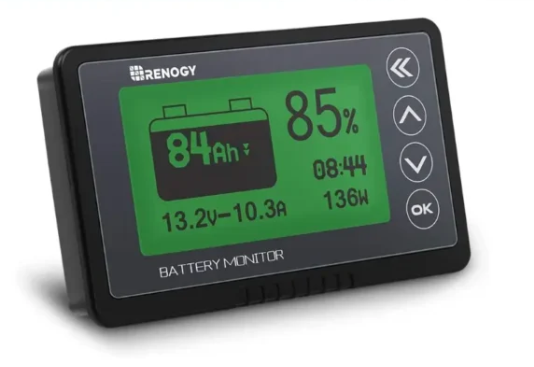
This gets mistaken for “the battery is full” when it isn’t — many controllers stop pushing charge past a certain voltage for safety, and if that cutoff isn’t set correctly for your battery chemistry (AGM, Gel, lithium), you’ll never actually hit 100% even though the controller looks like it’s charging fine.
f the voltage stall shows up right after driving, the alternator connection is the usual suspect → Leisure battery not charging from the alternator
Not sure if the plateau means the battery itself is degraded? → How to tell if your camper battery is bad
6. Ground / negative connection faults
A bad negative connection can produce symptoms that are hard to pin down, even when the positive cable and fuses all look fine.
Typical causes: a loose connection between battery and chassis, corroded or sulfated terminals, undersized negative cable, poorly crimped joints, a ground point covered in paint, rust, or dirt.
Typical symptoms: flickering or dimming lights, a water pump running weaker than usual, an inverter warning of low battery when it isn’t, devices resetting when a heavy load kicks in, irregular charging from the alternator or controller.
Check it under load — measure the voltage drop between the device’s negative and the battery’s negative terminal while the device is running. A connection can look fine with no load and fail the moment real current flows.
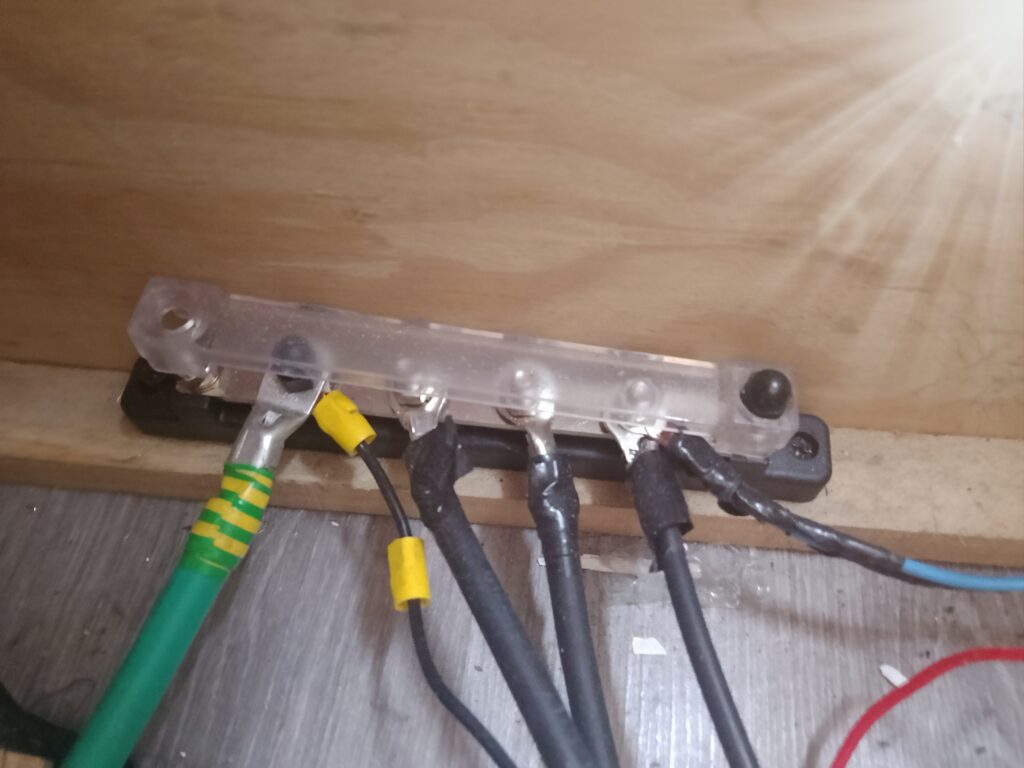
A crimped-with-pliers terminal is more common a culprit than thin wire. A terminal crimped with pliers instead of a proper crimper has resistance from day one, and it only gets worse with vibration. The tell: the terminal runs hotter than the cable itself. Swapping the cable won’t fix that.
7. Shore power (230V/120V) doesn’t work or trips the breaker
Typical causes: damaged shore cable or plug, no supply at the campsite pedestal, a tripped breaker or RCD, a faulty inverter-charger, moisture or a ground fault, a defective 230V appliance.
What to check: try a different pedestal and inspect the cable and plug visually. Disconnect all 230V devices and reconnect them one at a time. Check the breaker and RCD without opening the panel. Confirm the outlets work and that the charger is actually raising battery voltage.
If the breaker keeps tripping, or you notice a burning smell, moisture, or heat, disconnect shore power and stop resetting it. Any internal check on a 230V system should be done de-energized, and by a professional if you’re not experienced with mains wiring.
How to diagnose a fault without being an electrician
Before taking anything apart, check in this order:
- Actual battery voltage (multimeter)
- Fuse condition
- Loose connections
- Hot cables
- Controller error messages/lights
Most electrical problems get solved by a correct inspection alone — no parts need replacing.
Mistakes that make faults worse
- Swapping parts before measuring anything
- Adding loads without recalculating the system
- Mixing battery types
- “Temporary” patches that become permanent
- Leaving circuits unprotected
These are exactly how a small fault turns into a serious one.
FAQ
u003cstrongu003eWhat’s the most common electrical fault in campers?u003c/strongu003e
Fast battery drain — usually undersized capacity, hidden loads, or an aging battery.
u003cstrongu003eWhy isn’t my camper’s solar panel charging?u003c/strongu003e
Usually a wrong or failing controller, a shaded panel, a blown fuse, or wiring wired incorrectly.
u003cstrongu003eIs it normal for fuses to blow in a camper?u003c/strongu003e
No. Frequent blowing points to overload, undersized wire, or a possible short.
u003cstrongu003eWhat do I do if the inverter shuts off by itself?u003c/strongu003e
Check battery level, consumption spikes, and cable sizing before replacing the inverter.
u003cstrongu003eCan I diagnose electrical faults without being an electrician?u003c/strongu003e
Yes. Measuring voltage, checking fuses, and inspecting connections catches most common faults.
u003cstrongu003eWhy do the 12V lights work but not the 230V/120V outlets?u003c/strongu003e
The two circuits are independent — the problem is usually the inverter, its fuse, low battery, or a tripped protection device.
u003cstrongu003eWhy does voltage drop when I connect an appliance?u003c/strongu003e
An excessive drop points to a discharged or degraded battery, undersized cable, loose connections, or a load beyond what the system can handle.
Got a fault that doesn’t match any of these? Tell me about your setup and I’ll help you narrow it down.
[…] See the technical guides → · My story → […]
[…] Camper van electrical troubleshooting […]
[…] Common camper electrical faults […]