
Get this fuse undersized and it melts the first time you run a real load. Get it oversized “just to be safe” and it stops protecting anything at all — by the time it finally trips, the cable or the inverter itself has already taken the damage. There’s a right answer for your specific inverter, and it’s not a guess.
A 1000W inverter on a 12V system needs a 100–125A fuse; 2000W needs 200–250A. That’s the continuous draw plus a 20–30% safety margin.
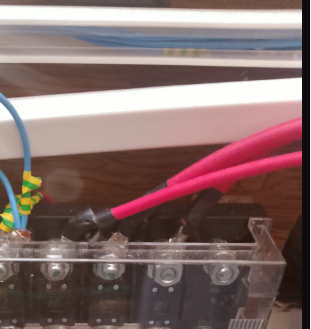
Getting the amperage right here is only half the job — the fuse also has to sit as close to the battery as possible to actually protect the cable.If you haven’t sized your inverter yet, start with the Inverter Size Calculator for Camper Vans to get the right wattage for your loads first.
“125A, no big margin to spare — but it’s the right number for this inverter, not a guess. Undersize it and it melts. Oversize it and it stops protecting anything at all.”
— Gustavo, why I measure everything
Start here: Size your inverter | Work out your consumption | Fix what’s broken
The Simple Formula (and Why It’s Not Quite That Simple)
The starting point is straightforward: take your inverter’s rated continuous wattage, divide by your battery voltage, and you get the continuous current draw. A 1000W inverter on a 12V system draws roughly 83A continuously (1000 ÷ 12). That number alone is not your fuse size — it’s the floor. On top of it, you add a safety margin, typically 20-30%, to account for real-world conditions and avoid nuisance tripping under normal use.
Reference Table: Fuse Size by Inverter Wattage (12V Systems)
| Inverter (continuous) | Approx. continuous draw | Typical fuse rating |
|---|---|---|
| 300W | ~25A | 30-40A |
| 500W | ~42A | 50-60A |
| 1000W | ~83A | 100-125A |
| 1500W | ~125A | 150-175A |
| 2000W | ~167A | 200-250A |
| 3000W | ~250A | 300-350A |
These are starting points, not a substitute for your inverter’s actual spec sheet — always check the manufacturer’s recommended fuse or breaker rating first, since cable run length and your own margin preference can shift the right number up or down.
Why the Fuse Rating Isn’t Just “Watts ÷ Volts”
The formula above assumes a steady, continuous load — but plenty of real appliances don’t draw steady current. Inductive loads (anything with a starting motor — power tools, compressors, some pumps) can pull roughly 5 times their normal running current for a brief moment at startup. That surge is exactly why so many people see their inverter trip, or their fuse blow, the instant they switch something on: the protection is reacting to that spike, not to the appliance’s actual running load.
This is also where the type of fuse matters, not just the rating. ANL and Class T fuses are common choices for high-amperage 12V-to-inverter runs because they’re built to tolerate a brief surge without nuisance-tripping, while still cutting fast in a genuine short circuit or sustained overload.
How I Sized the Fuse for My Own 1000W Inverter
My current setup runs a 1000W pure sine wave inverter, and I sized the fuse by taking the inverter’s rated draw and adding roughly a 20-30% safety margin on top — not the surge rating, the continuous one. That margin exists specifically because of what a lot of people get wrong: some inductive loads can draw around 5 times their normal running current for a split second at startup. That surge is exactly why so many people see their inverter trip or their fuse blow the moment they switch something on — the fuse or the inverter’s own protection reacts to that brief spike, not to the appliance’s actual running load.
To be transparent: I haven’t personally tested this inverter against a genuinely heavy motor-start load yet — something like a powerful drill or a tool with a large induction motor. I simply haven’t plugged one in. What I have run without any issue are modern devices that rely more on electronics than on a traditional starting motor — even ones with meaningful power draw, this inverter handles them without a hitch.
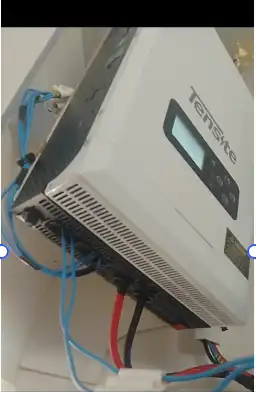
One detail worth mentioning if you’re running a combined inverter-charger like mine: the same 12V cable — and the same fuse — carries current in both directions. When the unit inverts, current flows from the battery outward; when you plug into 220V shore power and the unit switches to charging the battery, current flows back through those same cables the other way. That means the fuse has to be rated for whichever direction draws more, not just the inverter side — a detail that’s easy to overlook if you’re only thinking about inverter wattage.
With all that factored in, the 125A fuse I installed is holding up well — not with huge margin to spare, but solid and appropriately sized for this specific inverter.
Where to Place the Fuse (and Why It Matters as Much as the Size)
Getting the rating right is only half the job — where you physically install it matters just as much. The fuse needs to sit as close as possible to the battery (or whichever side of the run is the actual power source), not somewhere convenient along the cable or right next to the inverter. The reason is simple: any stretch of cable between the battery and the fuse is completely unprotected. If a short develops in that short unprotected section, nothing stops it. The closer the fuse sits to the source, the less cable is ever left exposed — so don’t forget this when you’re planning the physical layout, not just the amperage.
If you’ve got the size and the placement right and it’s still blowing repeatedly, the cause is usually something else entirely — see Why Does the Fuse Keep Blowing in My Camper’s 12V System? for the full diagnostic process.
Common Mistakes to Avoid
- Sizing the fuse off the surge rating instead of the continuous rating — this leaves you with a fuse so large it stops protecting the cable.
- Sizing it off the continuous rating with no margin at all — this leaves you with nuisance trips on entirely normal use.
- Installing the fuse near the inverter instead of near the battery, leaving a stretch of unprotected cable between the two.
- Forgetting that a combined inverter-charger needs the fuse rated for its charging current too, not just its inverting current.
- Using a fuse type that isn’t built for sustained high-amperage automotive/marine use — a standard blade fuse isn’t the right choice at these current levels; that’s what ANL and Class T fuses exist for.
- Getting the fuse right doesn’t help if the cable itself is undersized — check it with the Wire Gauge Calculator for 12V Systems.
FAQ
Can I just use a bigger fuse to avoid nuisance tripping?
Only up to the point your cable can actually handle safely — the fuse exists to protect the cable, not just the inverter. Going oversized beyond your cable’s rated capacity defeats the purpose entirely.
Does the surge rating of my inverter matter for fuse sizing?
Indirectly. Most fuses in this class (ANL, Class T) tolerate brief surges without tripping, so you generally size around the continuous rating plus margin — but always check your inverter’s actual surge spec against your fuse’s time-delay characteristics if you’re running heavy motor-start loads
What’s the difference between an ANL fuse and a Class T fuse here?
Both handle high continuous amperage. Class T fuses have a faster interrupt response and higher interrupt rating, making them a common choice for lithium battery banks where fault currents can be higher; ANL fuses are the more common, more affordable choice for lead-acid/AGM setups.
Related Tool
Inverter Size Calculator for Camper VansRelated Tool
Wire Gauge Calculator for 12V Systems
[…] Inverter/high-current circuit. The fuse belongs right at the battery or busbar side of the inverter cable — not tucked next to the inverter itself. If you’re sizing this one, see the companion guide on fuse size for inverters. […]
[…] current — including how efficiency, cable, and manufacturer guidance factor in — see what fuse size to use between battery and inverter. General […]
[…] ¿Prefieres verlo en inglés? Aquí tienes la guía equivalente sobre qué fusible poner entre batería e inversor: What Fuse Size Do You Need Between Battery and Inverter → […]
[…] Fuse between battery and inverter → What fuse size do you need between battery and inverter […]
[…] What fuse size between battery and inverter […]