
A fuse blowing once, out of nowhere, can be a coincidence — a power spike, a loose connection that touched metal for a split second, bad timing. But a fuse that keeps blowing, over and over, on the same circuit, is never random. It’s your 12V system telling you, very clearly, that something specific is wrong — and simply swapping in a new fuse each time doesn’t fix it. It just delays the real failure, and in some cases makes it worse.
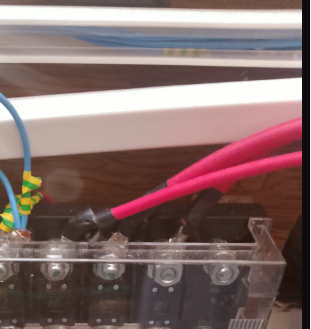
Blade fuse block with positive cable connection in a camper van 12V electrical panelThis guide walks through the actual causes behind a repeatedly blown fuse in a camper van’s 12V electrical system, a step-by-step way to diagnose which one applies to you, and — because generic advice only gets you so far — some hard lessons from wiring and maintaining a camper’s electrical panel myself.
The Most Common Causes of a Fuse That Keeps Blowing
The fuse is undersized for the actual load. This is the single most common cause. If the fuse rating is lower than what the connected device draws under real conditions (including startup surge, not just running amps), it will blow every time you use it — and that’s the fuse doing exactly its job.
A real short circuit. Bare wire touching the chassis, a pinched cable inside a panel, or a connector that’s corroded enough to arc. This is the cause that actually deserves urgency, because it means current is finding an unintended path to ground.
Undersized cable for the distance and load. Wire that’s too thin for the amperage and cable run length overheats under normal use, and a correctly-sized fuse will trip to protect it — the fuse isn’t the problem here, the wire gauge is. If you want to check your own cable against the symptoms of this exact issue, see Undersized Wire in a 12V System: The Symptoms and a 10-Minute Test.
Corroded or loose terminals. A poor connection increases resistance at that point, which generates localized heat and, over time, intermittent current spikes as the connection makes and breaks contact — especially over rough roads.
Moisture intrusion. Humidity inside a connector or fuse holder creates a path for current leakage that can behave exactly like an intermittent short, particularly after rain or in humid climates.
Reverse polarity during installation. Connecting a device backward, even briefly, can cause an immediate current spike that blows the fuse the moment power is applied — and can also damage the device itself in the process. (For more on this, see: Reverse Polarity in a Camper Van: Risks and How to Fix It.)
A 6-Step Way to Actually Diagnose It
Don’t skip straight to guessing. Work through this in order:
- Note exactly when it blows. Does it happen the instant you turn on a specific appliance, randomly while driving, or only under certain conditions (rain, rough roads, high load)? The pattern is your first clue.
- Check the fuse rating against real consumption. Look up the actual amp draw of the device — including startup/surge draw, which is often much higher than running draw — and compare it to the fuse rating. A mismatch here solves it immediately.
- Disconnect loads one at a time. If multiple devices share a circuit, isolate them individually and test which one triggers the blow.
- Visually inspect the wiring. Look for pinched cable, chafing against metal edges, bare copper, or heat discoloration on insulation.
- Test continuity between positive and ground. With everything disconnected, a multimeter reading near-zero resistance points to a real short somewhere in that circuit.
- Check every terminal for corrosion or looseness. Don’t just check the two ends — check every connection point along that circuit’s path, including at the fuse holder itself.
What My Own Experience Actually Shows
After years of using small automotive-style blade fuses in a camper van’s fuse panel, here’s a nuance most guides won’t tell you: in my experience, the connected device usually gets damaged before the fuse protecting it ever blows. The odds of a real overcurrent or overvoltage event severe enough to trip the fuse are, in practice, much lower than the odds of a device failing for completely unrelated reasons — poor connections, moisture, component wear, or a faulty regulator.
That doesn’t mean fuses are pointless — quite the opposite. You still need to fuse every device, cable, and circuit in the installation, because when an overcurrent event does happen, that fuse is the only thing standing between a spark and a fire. The proof is my own melted PWM regulator terminal: a bad connection generated enough localized heat to burn the terminal itself, and while the main fuse never even tripped, the damage nearly took the regulator out of service and noticeably degraded my AGM battery in the process.
So if your fuse “never blows,” don’t assume your system is immune to problems — it may simply mean the failures you’re having are happening through a different path than the one a fuse is designed to catch. Blowing fuses and damaged components are two different symptoms, and you need to watch for both.
How to Prevent It Going Forward
- Use the correct amperage rating for each specific device — check the manufacturer spec, not a guess.
- Separate circuits by consumption type (lighting, water pump, fridge, inverter) instead of bundling everything onto one fused line.
- Place the fuse as close as possible to what it protects — ideally right at the device, or right at the start of the cable run if the goal is to protect the cable itself. The closer the fuse sits to the source of a potential overcurrent, the less unprotected cable is exposed to a fault before the fuse cuts the circuit — meaning less wire at risk of overheating and more of the installation actually covered. A fuse placed far downstream leaves the cable between it and the battery completely unprotected. (A full placement guide for every circuit in the panel is coming soon: Where to Place Fuses in a 12V Camper Electrical System.)
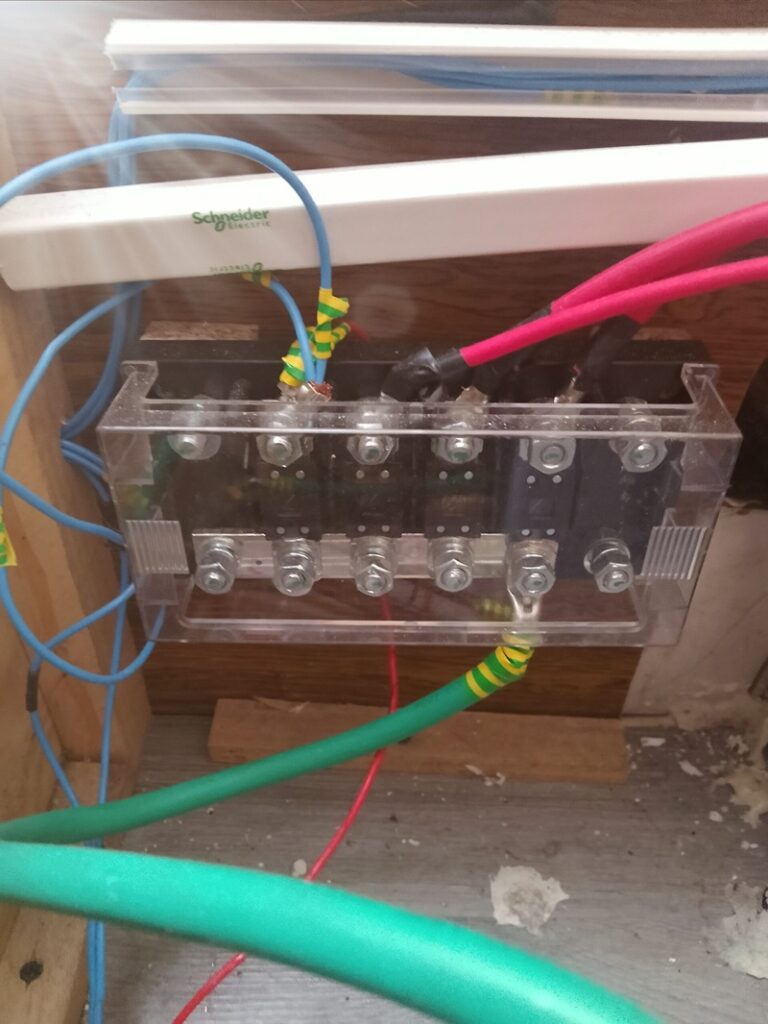
- Inspect terminals periodically, especially before long trips — corrosion and vibration loosening are cumulative, not one-time problems.
FAQ
Can I just use a higher-amperage fuse so it stops blowing?
No — except in the specific case where you confirm the original fuse was undersized for a legitimate reason. Increasing the amperage without addressing the underlying cause removes your protection instead of solving the problem; if a real short circuit develops afterward, a too-large fuse won’t catch it in time.
Can fuses weaken over time and start blowing more easily?
It happens, though it’s uncommon — mostly with older fuses that have repeatedly operated close to their rated limit.
Why does my fuse blow only sometimes, not every time I use the device?
Intermittent blowing usually points to an intermittent problem: a cable that only contacts metal in certain positions (like when the van is on rough terrain), occasional moisture, or a device that only draws a high surge under specific conditions.
Related Guide
Why Your Inverter Keeps Shutting Off: 7 Causes
[…] doing its job. If your fuse keeps blowing and you’ve ruled out an obvious short, see Why Does the Fuse Keep Blowing in My Camper’s 12V System? for the full diagnostic […]
[…] shutting off — the underlying fault is the same, just protected by a different component. See Why Does the Fuse Keep Blowing in My Camper’s 12V System? for the full diagnostic […]
[…] it rather than just being a one-off, the cause is usually something specific — not bad luck. See Why Does the Fuse Keep Blowing in My Camper’s 12V System? for the full diagnostic […]
[…] ¿Prefieres verlo en inglés? Aquí tienes el artículo equivalente sobre por qué salta el fusible constantemente: Why Does the Fuse Keep Blowing in My Camper’s 12V System? → […]
[…] right and it’s still blowing repeatedly, the cause is usually something else entirely — see Why Does the Fuse Keep Blowing in My Camper’s 12V System? for the full diagnostic […]
[…] Fuse Size What Fuse Size Do You Need Between Battery and Inverter 🔧 Fuse Keeps Blowing Why Does the Fuse Keep Blowing in My Camper’s 12V System? 🔧 Wiring Undersized Wire: The Symptoms and a Ten-Minute […]
[…] Still blowing after checking wire and rating → Why does the fuse keep blowing in my camper’s 12V system? […]
[…] Why does the fuse keep blowing […]
[…] Check the fuse closest to the connection point. If it blew, that’s a good sign: it did its job and probably protected the rest of the installation. A fuse that blows when you connect can also have other causes, so see why the fuse keeps blowing in a camper 12V system. […]