
You go to bed with a charged battery. You wake up and it’s low, and nothing was switched on.
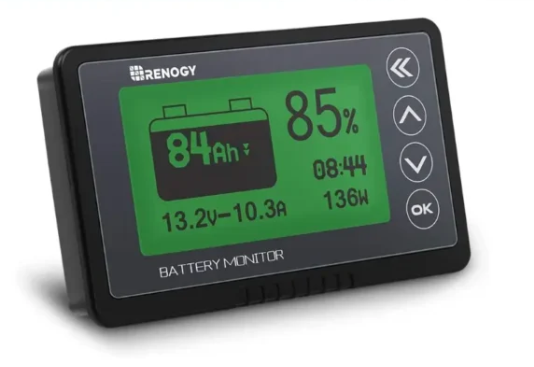
Two completely different problems produce that, and they look identical from the outside. One is something quietly drawing current all night. The other is a battery that no longer holds what it used to. Fixing the first is often free. Fixing the second costs a few hundred.
Almost every guide on this jumps straight to hunting the drain. That’s fine unless it’s the other problem, in which case you can spend a weekend pulling fuses to find something that was never there.
So this page starts by separating the two, and then finds the drain properly — circuit by circuit, with a multimeter, rather than by guessing. There’s a third possibility this page doesn’t cover: the battery is fine and nothing’s drawing on it, but it’s simply never getting topped back up while you drive — that’s a split-charge or DC-DC fault, not a drain.
The short version
- Two different problems look identical: a drain, or a battery that no longer holds charge
- Disconnect the battery overnight — that single test tells you which one you have
- Normal parasitic draw is 25 to 50 mA
- An idle inverter draws 300 to 1,500 mA — ten to sixty times more, and it’s the usual culprit in a camper
- Gas and CO detectors bypass the master switch by design. That’s correct, not a fault
First: is it a drain, or is it the battery?
Ten minutes here saves a weekend of pulling fuses.
The test: charge the battery fully. Then disconnect it entirely — both terminals off, nothing attached — and leave it overnight.
In the morning, measure it.
- Voltage has barely moved → the battery is fine. Something in the van is drawing current. Continue down this page.
- Voltage has dropped noticeably with nothing connected → the battery is losing charge internally. That’s not a parasitic draw, it’s a failing battery. What that looks like and how it happens
And a third case that catches people out: the battery holds voltage overnight while disconnected, but collapses the moment you reconnect it and switch anything on. That isn’t a drain either — it’s a battery that has lost capacity and can no longer deliver current. Same page as above.
One measurement, three answers. Do it before anything else.
How to measure the draw
If the battery is innocent, now you find what’s taking the current.
What you need: a multimeter with a 10 A DC current range, and a spanner.
- Switch everything off. Lights, fridge, water pump, inverter, radio. Everything you can reach.
- Disconnect the negative battery cable from the terminal.
- Set the meter to DC amps, on its highest range — usually 10 A. Start high; you can move down later.
- Connect the meter in series: one probe on the battery’s negative post, the other on the cable you just removed. All the current now flows through the meter.
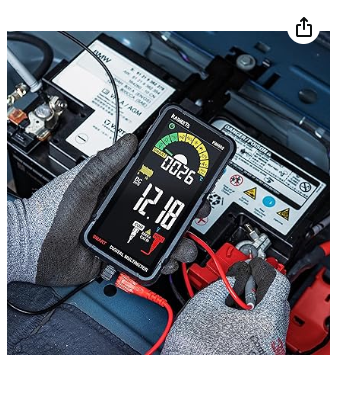
- Wait five to fifteen minutes. Many devices take that long to drop into standby, and reading too early gives a falsely high figure.
- Read it.
What the number means:
- Under 50 mA — normal. Clocks, memory, a monitor. Leave it alone.
- 50 to 200 mA — worth investigating. It’ll flatten a battery over a week of standing.
- Over 200 mA — something is genuinely on. Find it.
- Over 1 A — that’s not a parasitic draw, that’s an appliance running. Usually the inverter.
⚠ Don’t blow your meter
With the meter in series, every amp in the van passes through it. Don’t switch on the inverter, the water pump, the fridge or anything else while it’s connected — most multimeters have a 10 A fuse and it will go instantly. Start on the highest range and only move down once you know the reading is small.
Worth knowing before you try, because it’s the most common false negative.
A DC clamp meter cannot find a parasitic draw. It’s an excellent tool — you clamp it around a cable and read the current without disconnecting anything, and for diagnosing a fridge or an inverter it’s exactly right.
But most clamp meters resolve to about 0.1 A, and some only to 1 A. A parasitic draw lives between 0.02 and 0.2 A. The clamp reads zero, you conclude there’s no drain, and you go looking somewhere else.
For milliamps you need the meter in series, which means disconnecting the negative cable and putting the meter in the gap. It’s more fiddly and it’s the only way to see the number.
Rule of thumb: clamp meter for anything above an amp, multimeter in series for anything below.
Finding the culprit, circuit by circuit
If the reading is high and you’ve already confirmed nothing obvious is switched on, now you narrow it down. The method is simple and it works by halving the problem each time.
Leave the meter connected in series and watch the reading while you do this:
1 · Pull one fuse at a time. Start with the fuse box. Remove a fuse, watch the meter, put it back. When the reading drops noticeably, the circuit you just isolated is your culprit.
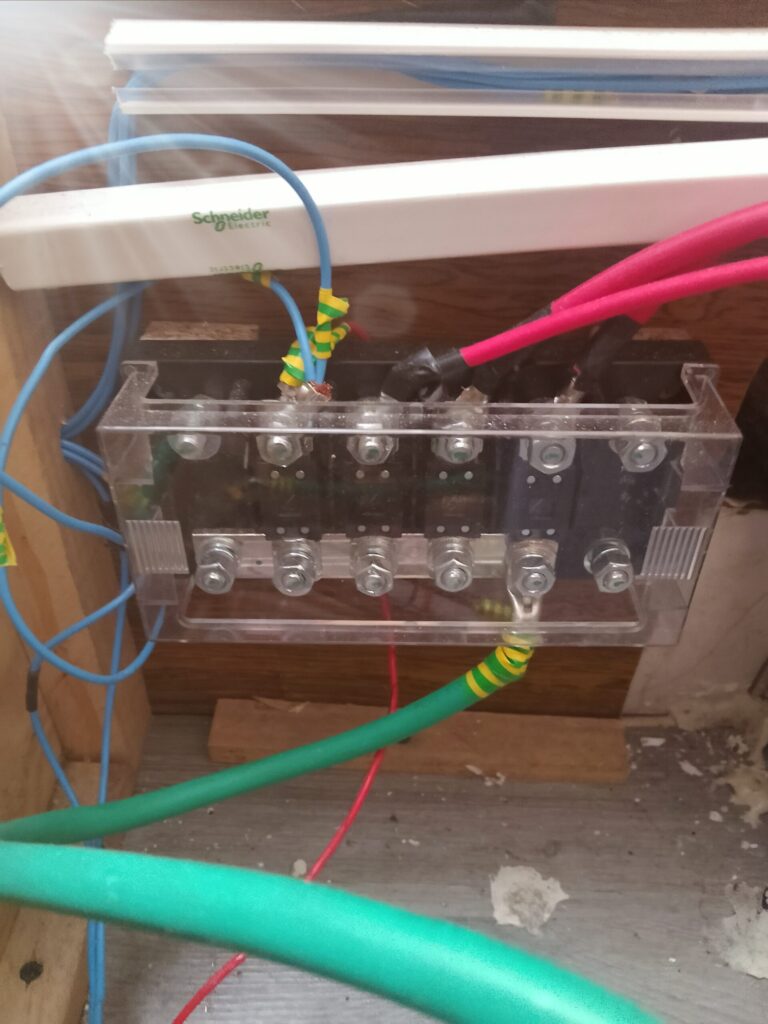
2 · Note how much it dropped. If pulling one fuse takes 400 mA off, you’ve found essentially all of it. If it takes 30 mA off, that’s a normal standby load and you keep looking.
3 · Then work along that circuit. Once you know which fuse, disconnect the devices on that line one at a time until the reading drops again.
Order to work in, because it saves time:
- The inverter first, always. It’s the biggest single draw and the easiest to forget
- Then anything with a display or a standby light — monitors, radios, control panels
- Then the fridge, which draws even when “off” on some models — and which is the largest continuous load in most vans anyway
- Then the charge controllers, which consume a little continuously by design
- Then detectors — gas, CO, smoke. These are often wired directly to the battery, bypassing the main switch, deliberately, so they keep working. That’s correct, and it’s also why turning off the master disconnect doesn’t always take the draw to zero
If pulling every fuse doesn’t find it, the draw is upstream of the fuse box — something wired directly to the battery. Look at what was installed after the original build: a tracker, a second monitor, an alarm, a DC-DC charger with its own supply.
And a shortcut worth knowing: if you have a shunt-based battery monitor, you don’t need any of this. It shows you the current draw continuously, and you can watch it drop as you switch things off, without disconnecting anything. That’s the argument for fitting one — not for the numbers it gives you day to day, but for the afternoon it saves you when something goes wrong.
If the van sits for weeks
Everything above assumes you’re living in the vehicle, where a small draw disappears into everything else you use. Stored vehicles are a different problem, and it’s the one where 25 milliamps actually matters.
Do the arithmetic. A 50 mA draw is 1.2 amp-hours a day. Over a month that’s 36 Ah — most of what a 100 Ah lead-acid battery can safely give you. Park it in November with a full battery and find it dead in December, having done nothing at all.
And it’s worse than that, because a lead-acid battery left discharged sulfates. So you don’t just come back to a flat battery. You come back to a damaged one.
What to do, in order of how well it works:
Disconnect the negative terminal. Not the master switch — the actual terminal, with a spanner. This is the only method that guarantees zero draw, and it’s free.
Understand that your master switch probably doesn’t cut everything. Gas, CO and smoke detectors are usually wired to bypass it deliberately, so they keep working. That’s correct and you don’t want to change it — but it does mean “switched off” isn’t zero.
Leave the solar connected, if the vehicle gets sun where it’s parked. A working solar setup covers a standby draw indefinitely and keeps the battery topped up, which is exactly what lead-acid needs. Just make sure it’s actually working before you rely on it — a failed controller looks like nothing from the outside.
Or use a maintainer, if there’s mains where it’s stored. A modern smart charger holds the battery at float without cooking it. An old single-stage charger left connected for months will do more damage than the drain would have.
And check it occasionally. A monthly look at the voltage takes two minutes and tells you whether whatever you set up is actually working.
What actually drains a camper battery overnight
Most articles on this topic are written about cars, and it shows. They talk about door lights, glove box bulbs and stereo memory — twenty-five milliamps of mystery.
In a camper, the drain is usually not a mystery at all. It’s something you left on, and it’s a hundred times bigger than anything a car article describes.
The inverter, which is the big one
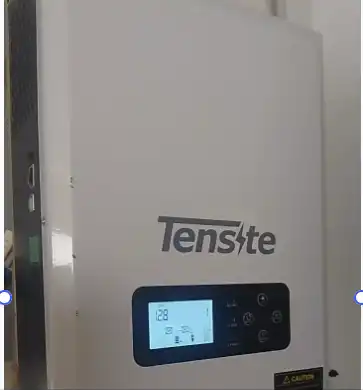
My motorhome has 230 V lighting. That’s a design decision I made years ago and it has a permanent cost: to have lights, the inverter has to be on.
So the sequence is this. I switch the lights off, I go to bed — and the inverter stays on all night. Nothing is plugged into it. It’s doing nothing. And a 1,000 W pure sine inverter idling draws between 0.3 and 1.5 amps at 12 V.
Put that next to the numbers the car articles quote. Normal parasitic draw in a vehicle is 25 to 50 milliamps. An idle inverter is 300 to 1,500 milliamps — between ten and sixty times more.
You will never find that by pulling fuses, because it isn’t a fault. It’s a switch nobody turned off.
If you’re not sure what your inverter costs you when idle, the sizing calculator covers it — along with the number most guides leave out entirely.
If you have 230V/120V lighting, wire a switch you can reach from bed, or accept that the inverter is part of your overnight consumption and size for it. And if you’re still planning the build: 12 V lighting doesn’t need an inverter at all, which is a good reason to choose it.
The heater and the fan, and how they differ
Two loads dominate my nights, one per season, and they behave differently.
The diesel heater, in winter, brings the battery down noticeably after several hours. And it has a visible startup signature — during the ignition sequence, with the glow plug drawing hard, you can watch the voltage dip twice before it settles into running.
The fan, in summer, actually consumes more overall — but it has no startup surge at all. It just starts and runs.
That difference matters when you’re diagnosing. A load with startup peaks stresses the battery and the wiring in a way a steady load doesn’t, even when the steady load uses more energy overall. And if you see the voltage dipping in a pattern at night, look at what has a compressor or a glow plug rather than at what’s simply on.
And the extreme case: 2 volts and a melted terminal
In the camper van, I woke one morning with no lights and no battery at all. The 100 Ah AGM read 2 volts.
That isn’t a drain. That’s a battery destroyed.
When I went looking, I found the terminal on the PWM solar controller melted — one of the small cheap ones. Whether it was arcing under load with the heater running overnight, or simply a connection that failed and stopped charging entirely, I can’t say for certain.
What I can say is that I had re-torqued those terminals at least twice before. They still worked loose. That’s what road vibration does to a connection over months, and it’s why a terminal that has been tightened once is not a terminal that’s finished.
An AGM at 2 volts is not recoverable. That one cost me the battery.
And the honest conclusion from my own vans: with everything genuinely switched off, including the inverter, I’ve never had a real parasitic draw problem. What I’ve had is loads left running and one connection that failed.
Which is worth knowing before you spend a Saturday pulling fuses looking for something that was never there.
Frequently asked questions
Why does my camper battery drain overnight?
Two very different things produce that symptom. Either something is drawing current all night, or the battery has lost capacity and no longer holds what it used to. Test which one you have by charging the battery, disconnecting it entirely and leaving it overnight — if it holds its voltage disconnected, the problem is in the van. In a camper the culprit is usually an inverter left switched on, which draws 300 to 1,500 mA doing nothing.
What is a normal parasitic draw?
· Between 25 and 50 milliamps with everything off. Between 50 and 200 is worth investigating. Anything above 200 mA means something is genuinely running. Over an amp isn’t a parasitic draw at all — that’s an appliance, and it’s usually the inverter.
Can I use a clamp meter to find a parasitic draw?
No, and it’s the most common false negative. Most DC clamp meters resolve to about 0.1 A, while a parasitic draw lives between 0.02 and 0.2 A. The clamp reads zero and you conclude there’s no drain. For milliamps you need a multimeter connected in series, with the negative cable disconnected.
My battery disconnect switch is off and it still drains. Why?
Most master switches don’t cut everything. Gas, CO and smoke detectors are usually wired to bypass the disconnect on purpose, so they keep working when the vehicle is stored. That’s correct and you shouldn’t change it — but it means u0022offu0022 isn’t zero. To reach zero you have to remove the negative terminal.
Does an inverter use power when nothing is plugged in?
Yes, and it’s the largest standby load in most campers. A pure sine inverter idling draws 0.3 to 1.5 amps at 12 V — ten to sixty times a normal parasitic draw. If your lighting runs on 230 V, the inverter has to stay on for the lights to work, so this isn’t carelessness, it’s a consequence of how the van was built. Wire a switch you can reach from bed.
How long can a camper sit before the battery goes flat?
At a normal 50 mA draw, roughly a month before a 100 Ah lead-acid battery is in trouble. And it doesn’t just go flat — a lead-acid battery left discharged sulfates, so you come back to a damaged one. For anything over a couple of weeks, disconnect the negative terminal or leave working solar connected.
[…] ¿Prefieres verlo en inglés? Aquí tienes la guía equivalente para localizar el consumo fantasma paso a paso: Camper Battery Draining Overnight? How to Find the Parasitic Draw → […]
[…] ¿Prefieres verlo en inglés? Aquí tienes la guía equivalente para encontrar la causa de la descarga: Camper Battery Draining Overnight? How to Find the Parasitic Draw → […]
[…] 🔋 Battery still losing charge despite a correct install? See the most common causes in why a camper battery drains on its own. […]
[…] ruling out a hidden parasitic draw first, which is a different and more common cause. See why a camper battery drains overnight for how to test for that […]
[…] Battery drops even when you’re not using anything → Camper battery draining overnight? Find the parasitic draw […]
[…] If the battery keeps losing charge for no clear reason → Why is my camper battery draining overnight? […]
[…] Beyond hunting down hidden loads, it’s worth working out how much energy the fridge, lights, pump, and inverter will actually use during the trip. If the battery is losing charge with no clear explanation, here’s how to find a parasitic draw. […]
[…] Why the camper battery drains itself overnight […]