
Charging time depends on panel wattage, battery type, and actual hours of usable sunlight. A 100Ah AGM battery at 50% discharge needs roughly 9–14 hours of useful sun with a 100W panel, 5–7 hours with 200W, and 3–5 hours with 300W.
“I killed a perfectly good AGM running a 230 V fan overnight through an inverter. That’s the kind of mistake this site is built to save you from.”
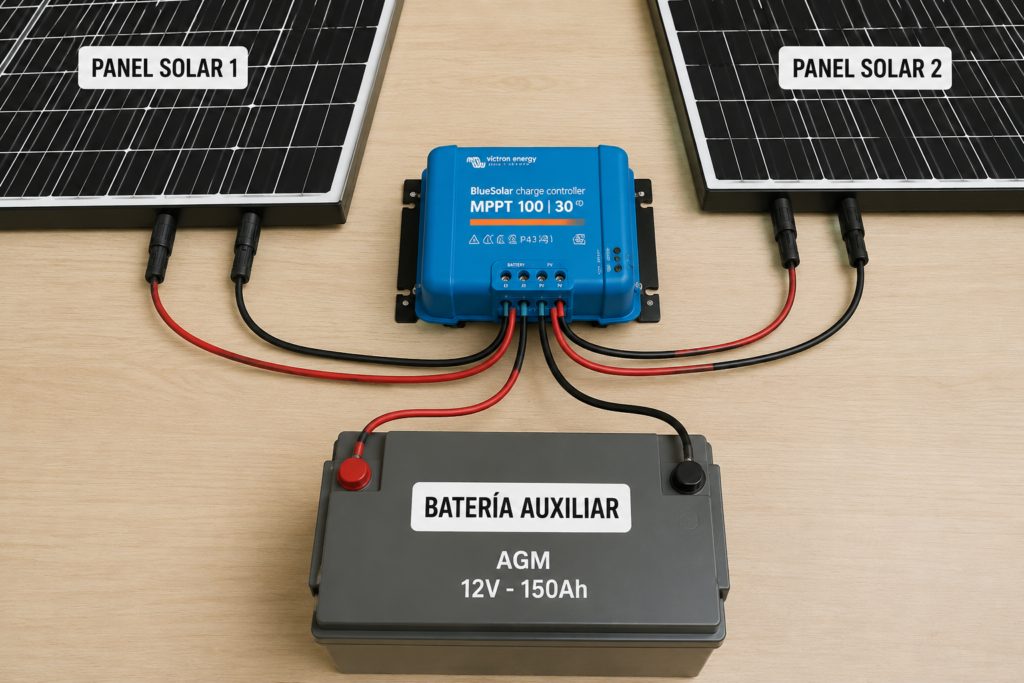
The quick formula for calculating charge time
To estimate charging time, use this basic calculation:
Hours of charging = Amp-hours to recover ÷ actual charging amps
For example: if your battery is 100Ah and you’ve used about 50%, you need to recover roughly 50Ah. If your panel and regulator are delivering around 5A during good sunlight:
50Ah ÷ 5A = 10 hours of useful sunlight
Important: this isn’t 10 clock hours. It’s 10 hours of genuinely usable sunlight. In practice, that could span two days, one long summer day, or considerably longer in winter.
Indicative charging time table
These figures are approximate, assuming a 12V battery discharged around 50% under good sun.
| Camper battery | Solar panel | Approx. real charge current | Indicative time |
|---|---|---|---|
| AGM 100Ah at 50% | 100W | 4–6A | 9–14 hours useful sun |
| AGM 100Ah at 50% | 200W | 8–11A | 5–7 hours useful sun |
| AGM 100Ah at 50% | 300W | 12–16A | 3–5 hours useful sun |
| Lithium 100Ah at 50% | 200W | 8–13A | 4–6 hours useful sun |
| Lithium 100Ah at 50% | 300W | 12–20A | 3–4 hours useful sun |
These numbers aren’t precise, but they illustrate something important: wattage alone doesn’t determine charging speed. The regulator, battery condition, temperature, panel angle, and actual sunlight hours all matter significantly.
Solar Charging Time Calculator
🔆 Solar Charging Time Calculator
Enter your own numbers to estimate how many hours of useful sunlight you actually need.
Factors that affect charging time
1. Solar panel power
Higher-wattage panels produce more energy. A 100W panel can suffice for minimal consumption — LED lights, phone charging, a water pump, small appliances. But if you’re running a laptop, fridge, inverter, stationary heating, or spending several days parked, it typically isn’t enough.
With 200W or 300W, things improve substantially, especially if you travel often and prefer to stay independent from campgrounds, the alternator, or shore power.
2. Actual sunlight hours
Not all daylight hours contribute equally. A panel might get direct sun from 9am to 7pm, but maximum charging doesn’t happen throughout that whole window. Peak production usually happens around midday; early morning and late afternoon yield less. Winter brings fewer useful hours and a lower sun angle.
Talking about “useful sunlight hours” rather than total daylight hours is a more accurate way to think about it.
3. The solar regulator
The regulator is a critical piece. You can have a great panel, but an undersized or faulty regulator will still prevent proper charging.
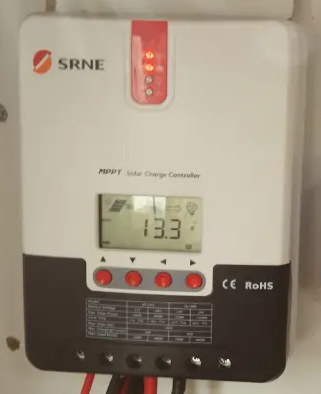
Two common types:
- PWM: simpler and cheaper
- MPPT: more efficient, worth it when getting the most out of the panel matters
In camper installations, where every amp counts, I prefer a properly sized MPPT regulator. It’s not magic, but it captures available energy more effectively, especially when the panel operates at a higher voltage than the battery.
As a rough general reference: a well-matched MPPT typically converts somewhere around 90–95% of what the panel produces into usable charging current, while a PWM controller is often closer to 75–80%, since it doesn’t step down the panel’s higher voltage the way an MPPT does. That gap is part of why the same-wattage panel can charge noticeably faster with one regulator type than the other.
4. Battery condition
This one gets overlooked a lot. Sometimes what looks like a panel problem is actually a worn-out or degraded battery.
This happened to me with a 100Ah AGM that had been in service for many years. The panel hadn’t changed, but the battery stopped charging the same way, discharged much faster, and dropped into deep discharge easily.
After replacing the battery, the exact same panel showed an immediate improvement: better charging, longer autonomy, steadier voltage. The panel was never the problem — the battery had simply reached the end of its useful life.
5. Battery type: AGM, GEL, or lithium
AGM batteries don’t behave the same way lithium does. AGMs are tough and common in campers, but discharging them too far shortens their lifespan, and the final stage of charging can slow down considerably.
Lithium batteries accept charge more readily, use more of their rated capacity, and generally charge more efficiently — provided the installation suits them and the regulator has the right profile. With AGM, avoid regularly discharging below 50%; with lithium you get more margin, but you need a properly configured system. As a general reference (not something I’ve measured myself): LiFePO4 batteries typically handle somewhere around 3,000+ cycles at 80–90% depth of discharge, while lead-acid/AGM batteries are usually rated for roughly 300–500 cycles, and only at about 50% depth of discharge. That gap is the real reason lithium tolerates deeper, more frequent discharges without wearing out as fast. If you’re still deciding between the two, I go into the real trade-offs — cost, weight, lifespan, cold-weather behavior — in AGM vs Lithium in a Camper Van.
My real experience with camper solar panels
My experience with rigid solar panels has been solidly positive. Over many years, I haven’t had a panel itself fail on me. The rigid panels I’ve used have held up well against time, weather, and continuous use.
The problems I’ve actually run into weren’t in the panel — they were elsewhere in the system: the regulator, the battery, the connections, the overall condition of the install. An unsuitable or faulty regulator can stop a battery from charging properly. An aging battery can look exactly like a panel fault when it’s really just struggling to store energy the way it used to.
Replacing an aging AGM with a working one, using the same panel, made the difference obvious: charging improved, autonomy went up, and voltage stopped sagging as fast.
Worth being upfront about: I’ve only ever used rigid panels. I can’t speak from years of personal experience about flexible panel durability for a real comparison.
Rigid or flexible panels: which charges better
Campers typically use one of two options: rigid or flexible panels.
Rigid panels are generally more durable, ventilate better, and hold up well to permanent roof mounting — these are the ones I’ve used and know well. Flexible panels have real advantages in weight and fitting curved surfaces, but they often run hotter with poorer ventilation when mounted flush against the roof. When a panel overheats, output drops.

With enough space and a proper install, I’d choose a rigid panel for a long-term system.
Practical example: 100Ah AGM battery with a 200W panel
Imagine a 100Ah AGM battery at 50% discharge — you need to recover roughly 50Ah. A 200W panel under good conditions might deliver around 8–11A of real amperage during peak hours.
50Ah ÷ 10A = 5 hours of useful sunlight
On a good summer day, you could recover most of that charge in one day. In winter, with shade or a poor angle, it’ll take considerably longer.
Practical example: 150Ah battery with a 300W panel
If your battery is 150Ah and you’ve used 50%, you need to recover roughly 75Ah. With a 300W panel and good sun, real charge current might land around 12–16A depending on the quality of the install.
75Ah ÷ 15A = 5 hours of useful sunlight
In practice, leave yourself more margin than that — there are always some losses, and charging speed isn’t constant throughout the process.
Signs something isn’t working properly
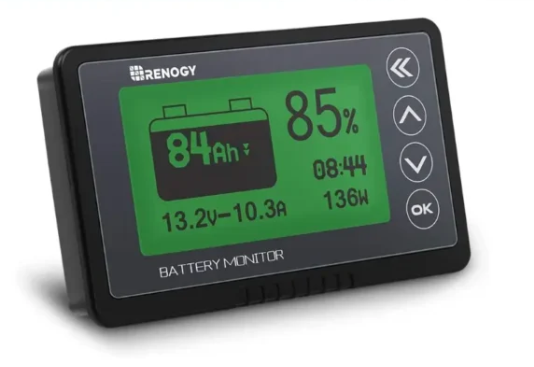
If charging seems inadequate, check these:
- The regulator shows no input from the panel
- Battery voltage rises quickly but then drops fast
- The regulator shows an error
- Loose or corroded connections
- Partial shade on the panel
- An old battery, or one with a history of deep discharge cycles
- The regulator isn’t configured correctly for your battery type
Often the panel itself isn’t the problem — it’s the regulator, the battery, or the quality of the connections. If you want to work through this systematically, I cover it step by step in Solar Charge Controller Not Showing Charge: How to Diagnose It.
So, how long really?
As a quick reference:
- 100W: workable, but slow if the battery is deeply discharged
- 200W: comfortably covers a simpler camper setup
- 300W: noticeably more comfortable autonomy, especially with moderate inverter use
- Older battery: may charge poorly even with a healthy panel — see how to tell if your camper battery is damaged or worn out
- Faulty regulator: can stall charging even with a perfectly good panel
The answer isn’t simply “install a bigger panel.” It’s getting the whole system — panel, regulator, battery, wiring, and consumption — working together.
FAQ
How long does a 100W solar panel take to charge a 100Ah battery?
If the 100Ah battery is at roughly 50% discharge, you need to recover about 50Ah. A 100W panel might deliver around 4–6A under good conditions, so that’s roughly 9–14 hours of useful sunlight. In practice, that charging often spreads across two or more days.
How long does a 200W panel take to charge a camper battery?
With real production around 8–11A, a 200W panel could recover 50Ah in roughly 5–7 hours of usable sunlight. That time grows with clouds, shade, connected loads, or as the battery draws less current during the final stage of charging.
Can solar panels fully charge a battery in one day?
Yes, depending on the energy needed, installed capacity, and available sun hours. A battery at only 20% discharge recovers easily in good conditions, while a deep discharge might take multiple days, especially in winter.
How long does a small solar panel take to charge a battery?
A 50W panel produces roughly 2–3A under good conditions. Recovering 50Ah could take 17–25 hours of useful sunlight. Small panels are better suited to maintenance charging or light consumption than to recovering a deep discharge quickly.
How do I calculate the solar charging hours I need?
Use this approximate formula: hours of charging = Ah the battery needs to recover ÷ actual charging amps. Needing to recover 50Ah with a steady 10A shown on the regulator: 50Ah ÷ 10A = 5 useful sunlight hours. Add margin for losses and reduced current during the final charging stage.
Does lithium charge faster than AGM?
Usually, yes — lithium batteries accept a higher current through more of the charging process. AGM batteries taper current down during the absorption phase, which stretches out the final stretch of charging. Either way, top speed is still capped by what the panel and regulator can deliver.
Does solar still charge the battery when it’s cloudy?
Yes, though with significantly less output — how much depends on cloud density, season, and available radiation. MPPT regulators capture the available production more efficiently, but they can’t make up for sunlight that simply isn’t there.
Can I use appliances while the battery is charging?
Yes, but consumption eats into the energy available for charging. If the panel is producing 10A and appliances draw 4A, the battery only gets roughly the remaining 6A. Real charging time ends up longer than the calculation suggests.
Why does the regulator show over 14V when the battery isn’t full yet?
The voltage shown during charging is the regulator’s applied charging voltage, not a direct read of stored capacity. Once the sun drops and the battery rests, voltage will settle down and show a truer picture. A monitor with a shunt is more reliable than relying on an instantaneous voltage reading alone.
Conclusion
Charging a camper battery with solar can take anywhere from a few hours to several days, depending on panel capacity, battery type, available sunlight, and the actual condition of the installation.
From experience, I wouldn’t blame the panel first. Rigid panels tend to last for years. Check the regulator, the connections, and especially the battery’s condition before anything else — an older battery can charge poorly even with a perfectly good panel, and an undersized or faulty regulator can stop energy from reaching the battery at all.
For a camper, sizing the whole system matters more than looking at any one component in isolation.
🔧 Related guides
Solar Charge Controller Not Showing Charge?
If your regulator seems to be the problem rather than the sun, work through it here.
How to Tell If Your Camper Battery Is Damaged or Worn Out
Slow charging is often the battery, not the panel — here’s how to check.
AGM vs Lithium in a Camper Van
Chemistry changes how fast your battery accepts charge — the real trade-offs.
[…] ¿Prefieres verlo en inglés? Aquí tienes la guía equivalente sobre cuánto tarda en cargar la batería con una placa solar: How Long Does It Take to Charge a Camper Battery With a Solar Panel? → […]
[…] How long it takes to charge a camper battery with solar […]
[…] How long it takes to charge a camper battery with solar […]