
Quick answer
- Drive most days: a DC-DC charger (booster) charges while the engine runs.
- Parked in winter with a heater on: shore power with a mains charger.
- A power station through an inverter-charger is only an emergency top-up.
A camper battery has three ways to get charged: the sun, the engine, and a mains socket. Solar is free, but it is the first to fail when you need it most: in winter, after a few cloudy days, or when you park under trees. That is when people start asking which of the other two is worth installing.
The engine route is a DC-DC charger, often called a booster: it takes power from the alternator while you drive and feeds the camper battery at the right voltage. The mains route is shore power: a 220 V hook-up at a campsite feeding a battery charger or an inverter-charger. Both do the job, but they suit very different ways of using a van.
I live with a single 150 Ah AGM battery, solar, a pure sine inverter-charger and two portable power stations as backup. I have not used a DC-DC charger or campsite shore power myself, so I will be clear about what I have tested and what I only explain. In this page I cover how each system works, where a small power station helps and where it does not, what charging through an inverter-charger really means, and how to choose between a booster and a hook-up.
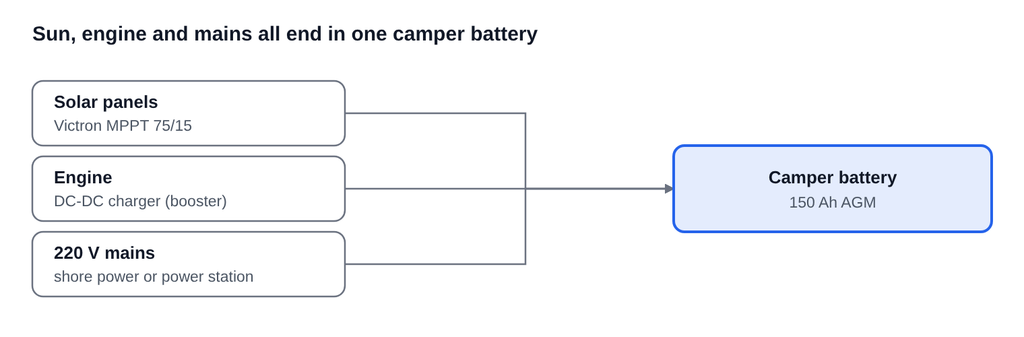
Three routes, one battery: solar when the sun is out, the engine when you drive, mains when you plug in.
What each option is
DC-DC charger (booster). A box wired between the starter battery and the camper battery. It takes whatever the alternator gives and outputs the right charging voltage for the battery type (AGM, gel, flooded or lithium). It is the better choice over a simple relay on modern vehicles: many cars since about 2015 have smart alternators that drop to roughly 12.3 V when the starter battery is full, and at that voltage a plain relay almost never fills the second battery. With a deeply discharged lithium battery it is not optional, because the battery can ask for the alternator’s full output continuously. Our Spanish guide covers the wiring step by step: how to connect an auxiliary battery in a camper.

The engine feeds the starter battery, and the DC-DC charger passes that power on to the camper battery with the right voltage.
Shore power (hook-up). A 220 V campsite socket feeding a mains battery charger, or a charger built into the inverter. It works with the engine off, the weather irrelevant, and it can deliver high current for a full, proper charge. The limit is where you can park.
Portable power station as backup. A unit like an EcoFlow River 2 or a Jackery, plugged into the inverter’s mains input so the inverter-charger charges the 12 V battery. It is not a charging system, only an emergency top-up (limits below).
Types of booster (alternator charging)
People say “booster” for several different devices. They all take power from the starter battery or the alternator, but they do not behave the same.
| Type | How it works | Good for | Limits |
|---|---|---|---|
| Simple relay (split-charge relay) | A switch that joins both batteries when the starter battery is above about 13 V and separates them when the engine stops | Older vehicles with a fixed-voltage alternator, lead-acid or AGM | Does not regulate voltage or current, so a smart alternator (about 12.3 V) never closes it properly, and a flat lithium battery can pull too much current |
| Smart relay (voltage-sensing relay with a controller) | Same idea, but a small controller watches the voltage and cuts the link when the alternator is off or the starter battery drops, so it never drains the starter battery | Basic setups where you want protection for the starter battery | Still no charge profile: the battery gets whatever voltage the alternator gives |
| DC-DC charger, non-isolated | Boosts or reduces voltage to a proper multi-stage charge profile for AGM, gel, flooded or lithium; ground is shared with the vehicle | Most campers, including smart alternators and lithium | Costs more; needs a correct fuse and cable size |
| DC-DC charger, isolated | Same, but the output has a separate ground from the input | Systems where the battery negative must stay separate from the chassis | Rarer and more expensive |
| DC-DC charger with solar input (combo) | A DC-DC charger with a built-in MPPT solar controller, so one box manages alternator and panels | Small vans that want fewer components | Check that the solar input voltage and power fit your panels |
In short: a relay only connects, a smart relay connects and protects, and a DC-DC charger actually charges the right way. If the vehicle has a smart alternator or the camper battery is lithium, the DC-DC charger is the only one that makes sense. I have not installed any of these, so this is general information, not my own test.
To confirm before publishing: model names and specs, and whether you want to mention a specific brand.
My real case
My camper runs on a single 150 Ah AGM battery, not a bank. It is charged by solar panels through Victron MPPT 75/15 controllers, and I have a Tensite 1000 W pure sine inverter-charger. As backup I keep an EcoFlow River 2 and a Jackery, plugged into the inverter so it charges the 12 V battery.
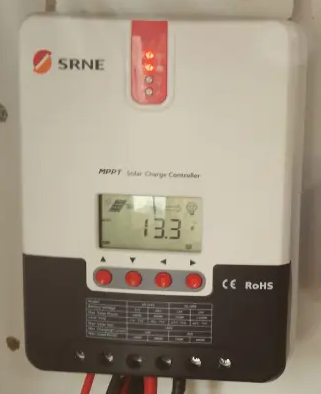
In winter the diesel heater runs all night. By morning the battery sits at about 12.1–12.2 V. Plugging the power station in brings it back to 12.6–12.7 V. I have never used campsite shore power, and I do not have a DC-DC charger, so I describe those two as options, not as something I tested.
How my inverter-charger setup charges the battery
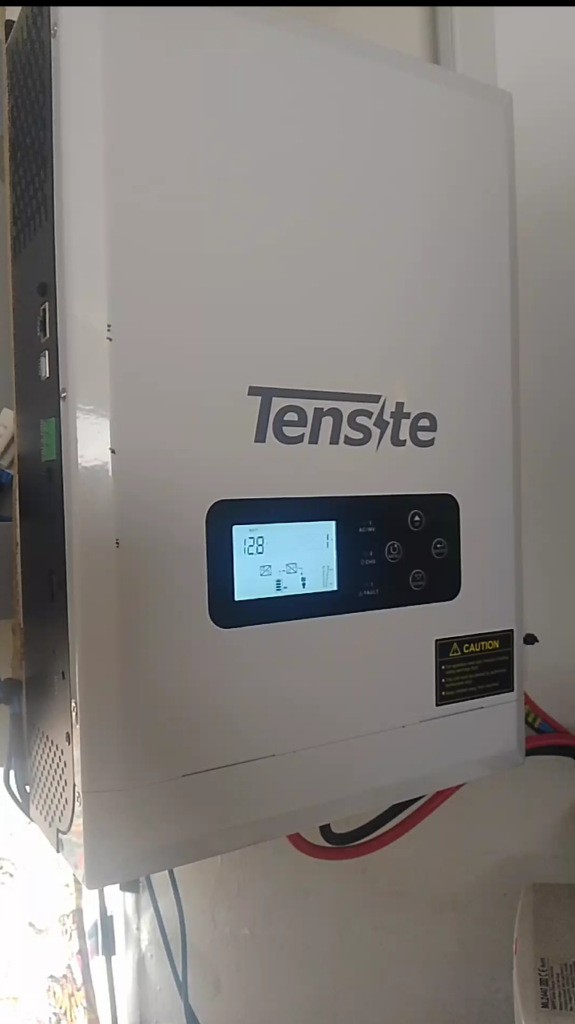
My Tensite 1000 W pure sine unit is an inverter-charger, so it works in two directions. With 220 V on its input it charges the 12 V battery; with no input it turns the battery into 220 V. That is why I can plug an EcoFlow or a Jackery into its mains input and get a charge into the AGM, even though the power station knows nothing about the battery.
The chain is power station, DC to 220 V AC inside the station, then AC to 12 V DC inside the charger. Each conversion loses energy, so a lot of the station’s capacity never reaches the battery. A DC-DC charger skips that chain: alternator power goes to the battery in one step, and the alternator has far more energy to give than a 256 Wh box.
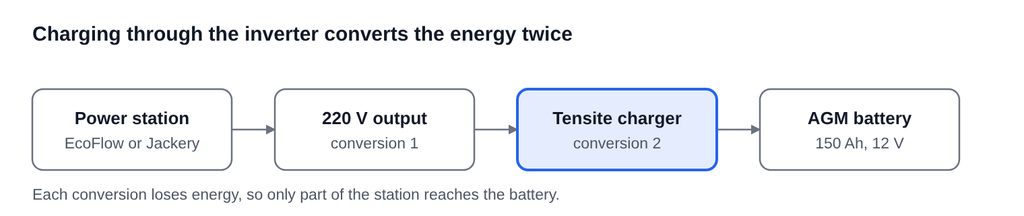
The EcoFlow or Jackery makes 220 V, and my Tensite turns it back into 12 V for the battery.
What I measure in practice: after a night of heating the battery reads about 12.1–12.2 V, and plugging in the power station brings it back to 12.6–12.7 V. With a fully flat battery it does not work, because the station runs out first. The charge current of the Tensite is to confirm and I will add it here once I read it on the unit.
One caution for anyone copying this: not every inverter has a charger. A plain inverter only converts battery power to 220 V and cannot charge anything. Check the datasheet for a charge function and its amps before you count on it.
Limits of a small power station as backup
A power station restores voltage, but it cannot rescue a flat battery. The River 2 holds about 256 Wh and gives 300 W of AC output. After inverter and charger losses, only roughly 13–15 Ah ends up in a 12 V battery, which is about 10% of a 150 Ah AGM. That is enough to lift a battery from 12.1 V back to 12.6 V after a night of heating, but not to recharge one that is truly empty.
The inverter-charger’s charge current is to confirm: it caps how fast any backup can push energy in. For regular charging, use solar plus a DC-DC charger, or shore power.
DC-DC charger vs shore power: which to pick
| DC-DC charger | Shore power | |
|---|---|---|
| Needs | Engine running (driving) | A 220 V campsite hook-up |
| Works when parked | No | Yes |
| Best for | Travelling every day, off-grid | Long stays at campsites, winter |
| Handles lithium and smart alternators | Yes | Yes, with a suitable charger |
| Cost | Charger plus fuse and cable | Mains charger or inverter-charger |
| My experience | None yet | None yet |
If you drive most days, a DC-DC charger is the steadier fix because the alternator tops up the battery while you move. If you stay put in winter with a heater running, shore power wins. For both cases, solar remains the base and a power station is only an emergency top-up.
FAQ
Can I charge a camper battery with a DC-DC charger while driving?
Yes. The charger takes power from the alternator and gives the camper battery a proper charge profile, so the battery fills while you drive.
Is a DC-DC charger better than a split-charge relay?
For a smart alternator or a lithium battery, yes: a relay does not regulate voltage or current. With an old fixed-voltage alternator and an AGM battery, a relay can still work.
How long does a DC-DC charger take to charge the battery?
As a rule of thumb, divide the amp-hours you need to refill by the charger’s amps, then add about 20% for losses. Example: refilling 60 Ah with a 20 A charger takes roughly 3.5 hours of driving.
Does an inverter charge the battery?
Only an inverter-charger does. A plain inverter converts battery power to 220 V and cannot charge anything.
Can a portable power station charge my camper battery?
Through an inverter-charger, yes, as a small emergency top-up. In my case it lifts the battery from 12.1 V to 12.6 V after a night of heating, but it cannot recharge a flat battery.
Does solar replace the DC-DC charger?
No. Solar depends on the weather and the season. The DC-DC charger works whenever the engine runs. Together they cover most situations.
What do I need for shore power?
A mains charger or inverter-charger, an outdoor-rated hook-up lead and, ideally, a residual-current device (RCD) between the socket and the van.
Internal links and close
Related reading (Spanish originals; English slugs to confirm before publishing):
- How to connect an auxiliary battery
- Auxiliary battery not charging from the alternator
- How long a camper battery takes to charge with solar
Close: solar first, then a DC-DC charger if you drive, shore power if you park, and a power station only as a last resort.
[…] DC-DC charger vs shore power […]